
Is TerraCycle Worth Your Time? (Low-Waste Living Tips That Fit Into Real Life)
I’ve briefly mentioned TerraCycle before in some of my sustainable product reviews, but there is so much more that needs to be said about them. So I wanted to explain here what TerraCycle is (including its legitimate criticisms and limitations), how to use their recycling programs, and some long-term solutions that are even better.
I don’t think any recycling company has ever been as widely discussed online as TerraCycle. The blog posts and magazine articles include a lot of criticism of TerraCycle (mostly anecdotal, but also including some serious greenwashing accusations), and a lot of fawning reviews (which mostly don’t tell the whole story).
Before digging into the topic, I thought TerraCycle’s brand-sponsored programs meant companies were at least making a costly effort to do better. (Better than just expecting municipalities to fix the packaging problem the companies themselves created.)
And that’s not entirely untrue. But the truth about this internet-famous recycling brand is a lot more complex – and sustainability bloggers, myself included, need to give it more than a passing mention.
What is TerraCycle?
TerraCycle is a New Jersey-based recycling company that’s best known for letting people mail in their recyclables. They have several different flavors of this system but I’ll focus on their “brand-sponsored” recycling programs. (Those are the ones I’ve mentioned before in my reviews of low-waste cleaning products and low-waste toiletries.)
The point of brand-sponsored recycling is to let companies take responsibility for the full lifecycle of their products’ packaging, cradle to grave.
What does that mean? Normally, companies can buy plastic packaging, fill it up, sell it, and forget it. Taking responsibility for the full lifecycle of their packaging means companies have to consider (and pay for) what’s going to happen to it after they sell it, too.
At least that’s the idea.
A little eco-background
This kind of accountability is part of what’s called the “Polluter Pays Principle” in international law. (A concept I first learned about doing a master’s in sustainable business.) It’s definitely nothing new, and not just for plastic.
In short, the PPP is the reason companies can’t dump their toxic waste in rivers and oceans.
But essentially they’re allowed to do the same thing with plastic since we don’t hold them responsible for their packaging. That’s why Coca-Cola is considered the biggest plastic-polluter in the world.
So applying this principle to plastic waste is a logical next step. There’s even a bill going through the US Congress right now, the Break Free From Plastic Pollution Act, that would make it law. And some states are doing it on their own through “EPR” laws – Extended Producer Responsibility. Maine just passed the first one! Oregon is working on something similar.
How does TerraCycle work?
What makes TerraCycle different from normal recycling is that the companies that produce the plastic pay for the service through TerraCycle’s “brand-sponsored” recycling programs. (Or we pay for it, in the case of their “zero-waste boxes,” but I’ll get to those later.) Some of their programs also include charity donations for each item recycled.
I asked them for details on the process of working with companies. They said that first, TerraCycle assesses the candidate’s packaging to see if it’s even recyclable, or if they can figure out a new way to recycle it.
(And they have developed new ways to recycle some materials. They run what they say are the world’s first recycling programs for cigarettes, contact lenses, musical instrument strings, and other items. How efficient these programs are is anyone’s guess.)
Side note: The contact lens program is unique and easy! You save up your lenses and packaging, and drop them off at an eye doctor’s office. (Find a location on the map here.)
This is great, because bulk collection is much more efficient than DIY, and otherwise, contacts in the garbage are basically begging to become fish food. (Whatever you do, just PLEASE don’t flush them down the toilet!)
Back to TerraCycle’s process: If the material can be recycled, the “sponsoring” company pays for pre-paid shipping labels so their customers can send packaging to TerraCycle, and pays TerraCycle the cost of processing the material. So it’s an investment for the companies. TerraCycle then hires third-party recyclers to recycle what’s collected.
TerraCycle wouldn’t tell me how much brands have to pay to sponsor a program with them – but it’s certainly less than the cost of switching to plastic-free, sustainable and/or more easily recyclable packaging.
I talked to Dana DiPonio about this. Her small Canadian company, Nelson Naturals, makes several kinds of zero-waste toothpaste in refillable glass packaging (which I reviewed here). They’re launching a subscription option for their toothpaste tablets this fall, with refills in compostable paper packets.
(You’d need to have access to either municipal or home composting to take advantage of that. But luckily, home composting is becoming a bit more accessible to apartment dwellers thanks to kitchen compost machines like the Lomi composter, which I’ve reviewed here.)
(Related: Activist Skincare does something similar, which is very unique in the skincare industry! You can read my full review of Activist’s refillable skincare line here.)
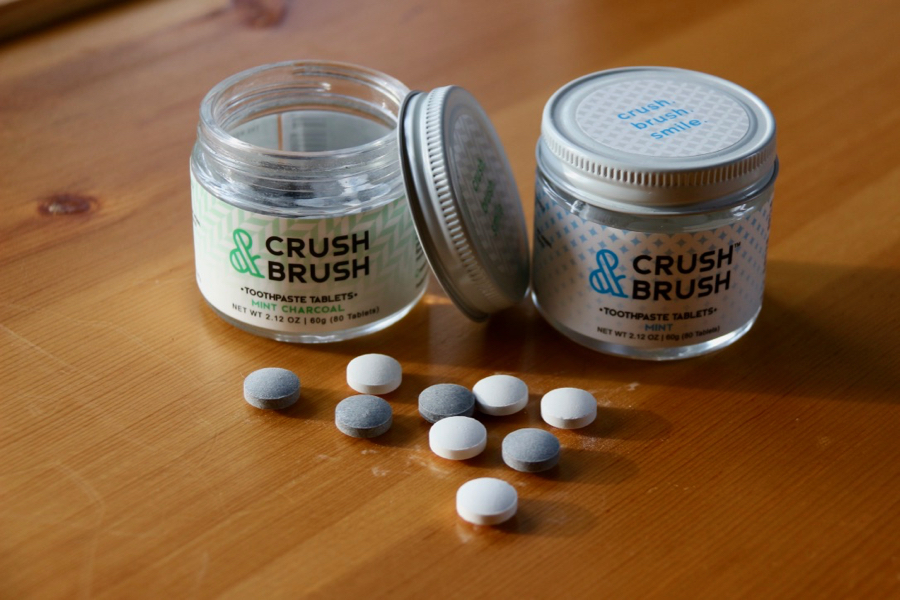
But as Dana told me, that sustainable paper packaging isn’t cheap, or easy to find:
“As a company, it’s often more cost effective and easier to choose less sustainable packaging options. If you do make the decision to use sustainable packaging that has a truly circular lifespan, it will likely cost you quite a bit more. It’s also up to the company to thoroughly vet all suppliers and vendors to ensure that you are indeed receiving the high quality product you are paying for. It’s about choosing the right packaging/materials/suppliers, not the cheapest or fastest.”
– Dana DiPonio
How much more does sustainable packaging cost, exactly?
“As we are moving from a sustainable packaging (glass) to another sustainable packaging, it’s about double the cost for now. However, if you were looking at conventional (plastic sachets or toothpaste tubes) and moving to fully compostable sachets or jars like we currently use, the difference would be more like 5x! The cost savings for using single use plastics is wild, and sad.”
– Dana DiPonio
(If you want to try some sustainably-packaged oral care products, use the code tiltedmap10 for 10% off any order from Nelson Naturals!)
Is TerraCycle Greenwashing?
If you want to test companies for blatant greenwashing (AKA, trying to look like a sustainable company when they’re really not), the first step is just looking for details. Ask them questions and see if they bother to respond.
Take EarthSider, for example, a Chinese knock-off of LastObject – inventor of the reusable Q-tip, among other items.
EarthSider is a complete greenwasher and sham company. I contacted them multiple times about the sustainability claims on their website, and never heard a word back. (I wrote about this and other ways to spot greenwashing in my review of the two brands.)
TerraCycle, on the other hand, is extremely responsive. I’ve exchanged emails with several people in the company, and they’ve always been able to share details on what they can and can’t do. They seemed straightforward, and they are clearly real people. And those do count for a lot.
But they’re also currently being sued by an NGO for greenwashing. And not all greenwashing is as obvious, or as malicious, as EarthSider’s.
So is TerraCycle legit?
Short answer: Yes, they’re a real recycling company. By all means, keep using TerraCycle! There’s absolutely nothing in the current controversy that should make you decide not to.
But…
Here’s where it starts to get muddy: TerraCycle’s mission is to “eliminate the idea of waste.” (They’ve trademarked the phrase.)
That’s a great goal, and I wish them the best. But frankly, recycling was never going to be the way to eliminate waste. It’s great as a last resort, not as the entire plan.
(They’ve added other initiatives, namely an intriguing delivery and refill system called Loop, but their main business is still recycling.)
So I have no problem with TerraCycle as a recycling company, because with the way we consume over-packaged everything right now, we need as much recycling as we can get. I think they are trying to do something positive.
What I do have a problem with is companies selling the idea that recycling could ever “eliminate the idea of waste.” It can’t, especially for plastics, and TerraCycle definitely does sell that idea – and helps big plastic-producers sell it, too.
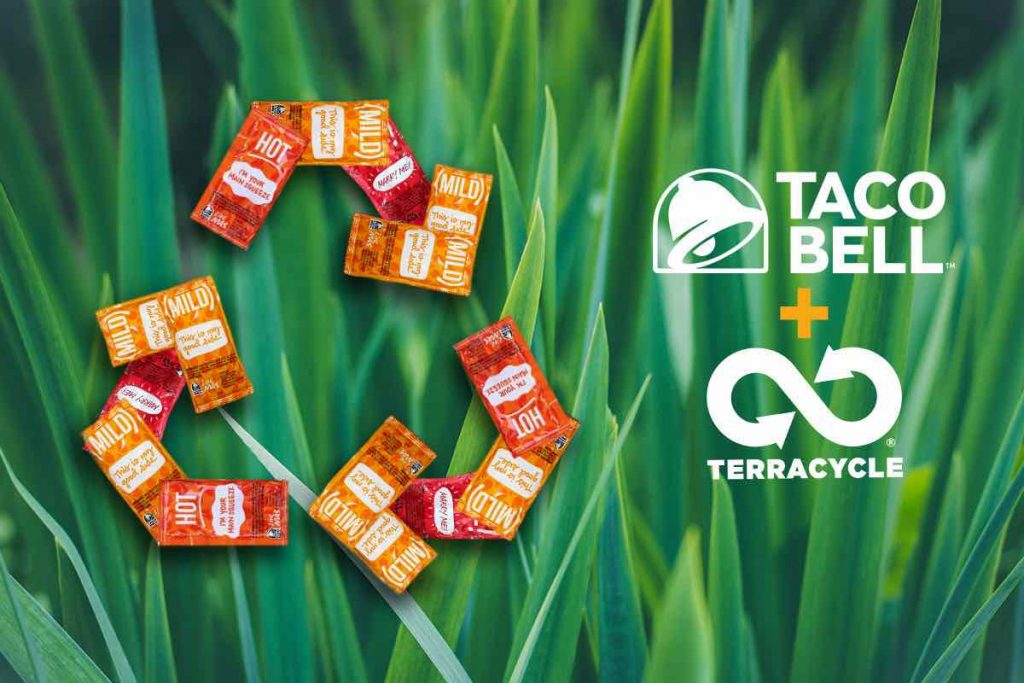
That’s the main greenwashing critique of TerraCycle: Their brand-sponsored recycling programs let companies look like they’re being more sustainable, instead of making more meaningful change.
Because companies can skip upgrading to the expensive, sustainable packaging that Dana sprung for at Nelson Naturals, and instead offer recycling through TerraCycle to still look like they’re trying.
Maybe that’s harsh, or too simplistic.
Maybe there really aren’t sustainable packaging alternatives available for some kinds of products – yet. But still, “That technology just doesn’t exist” isn’t really an excuse I’m interested in hearing. (Cause I know one thing: If we can get Jeff Bezos into orbit, I’m pretty sure we can find a way to handle deodorant tubes and milk cartons.)
Which all leads to one big question:
Does recycling in general even work?
Short answer: Yes, but. (Jk, there are no short answers in this post!)
Yes, recycling definitely works. But it’s only energy-efficient enough to make sense for certain materials.
Aluminum is one of the best materials to recycle. It can be recycled infinitely without degrading. (So can glass!) Recycling aluminum to make new cans uses 20x less energy than mining and smelting fresh aluminum. And about 50% of aluminum cans get recycled! (We could still do better though, right?)
Semi-related: A few shots from my grad school field trip to an innovative recycling facility in Italy:
So recycling does work for some things, but we’re generally not very good at it.
Even though recycling plastic also saves lots of energy versus making new, only 9% of plastic gets recycled. That’s because of a lack of facilities, lack of organized collection systems, lack of education on how to recycle and why it matters and – mostly – because it’s not worth very much.
And even in the best curbside recycling programs, not all plastic is recyclable.
Single-layer #1 (PET) and #2 (HDPE) plastics are the most recyclable (as plastics go).
So that means things like plastic water bottles and milk jugs, but definitely not those irritating Tetra-Paks that are made of layers of plastic, paper and aluminum, and are thus really hard to recycle. (And not recyclable at all in most places).
And even what is recyclable doesn’t always get recycled if the materials aren’t clean, or aren’t sorted correctly. (Not sorted correctly is a diplomatic way of saying people have no idea what to recycle where, in what bins, in which cities, with or without the lids, etc.)
After all, recycling is absurdly complicated (but for legitimate reasons).
The rules change from one city or town to the next. (That’s because each municipality is usually on its own to buy recycling equipment, so they end up with different machinery that can process different types of materials. That’s why, in some cities, you need to separate different types of plastic, while others let you put all the plastic together, for example.)
But there is one good thing about under-funded municipal recycling programs. I think it’s summed up best in a quote from a Vox article that’s one of the most comprehensive critiques of TerraCycle I’ve read – and I’ve read many lately. I highly recommend reading it.
“Pretty much anything is technically recyclable if you throw enough money, hours, and energy at it.”
– John Hocevar, Oceans Campaign Director at Greenpeace USA, quoted in Vox
When recycling isn’t paid for by:
a.) companies that want to look more sustainable without making expensive improvements to their packaging (so they hire TerraCycle instead), or
b.) by me, sitting at home feeling bad about having bought that packaging,
… then things only get recycled when it’s energy-efficient and profitable to do so. 💰
But whyyyyy?
The fact is, plastic packaging just wasn’t designed to be recycled. It was designed to be cheap, and to give oil companies another way to sell us petroleum.
As the New York Times reports:
“As the supply of oil and gas swells but global demand shows signs of leveling off, plastic production is one of the fossil fuel industry’s most promising areas of growth.”
And you know those little triangular “recycling symbols” ♻️ with the numbers? They were actually invented by oil industry marketers, not by recycling companies.
Having a “recycling” symbol does NOT mean a piece of packaging is recyclable. ♻️ It’s just a code for the type of material it’s made of, not a guarantee of recyclability.
Now that is real greenwashing – to make us believe there’s an environmentally responsible (and economically feasible) way to recycle plastics, when there actually isn’t.
(Give a listen to this episode of Planet Money. It’s one of my favorite podcasts, and it explains the whole thing.)
And then there’s another problem: We want to keep things out of the landfill, so we just throw things into the recycling bin… even if they don’t belong there. It’s called “wish-cycling.” And it frequently causes recyclers to end up throwing out entire loads of otherwise recyclable materials – meaning straight to the landfill – because they’re contaminated.
At first blush, TerraCycle is sort of the perfect response to wish-cycling.
Can’t recycle plastic packaging where you live? Sign up for TerraCycle! Can’t recycle toothpaste tubes anywhere? Send them to TerraCycle!
So how do you sign up for TerraCycle?
This is the part I started trying to explain when I originally mentioned TerraCycle. (And when I was planning this post as a simple “how to use TerraCycle” guide, thousands of words ago.)
The short answer: You make a TerraCycle account (here in the US, or here for other countries), sign up for the programs you can use, print out free shipping labels, and drop your saved-up empties in the mailbox.
Each program has different requirements and accepts different brands and types of packaging, so you might find yourself with multiple packages to mail.
The long answer: How to actually use TerraCycle
If that already sounds complicated, be warned: There are a lot of buts coming. As in, it sounds easy enough to use TerraCycle’s brand-sponsored programs, but there’s often a waitlist to even sign up for them. It can take many months to be allowed in and get an elusive shipping label. I’m currently on the waitlist for several programs.
That’s because companies decide how much they want to spend for us to recycle their packaging with TerraCycle. They can simply say “no” when they’ve hit their budget.
So after selling us products based on the promise that we could definitely recycle them, even if we live in places without curbside recycling programs, I’m feeling a little raw about this.
That’s why I’m increasingly viewing TerraCycle brands as a last resort.
I’ve recommended products from The Ordinary and Paula’s Choice on my Master List of Plastic-Free Toiletries. There were caveats at the time, but now I’m reconsidering some of those recommendations.
Let’s do a couple examples of how TerraCycle works using those brands.
TerraCycle Example #1: Paula’s Choice
Paula’s Choice is generally a solid brand that’s transparent and avoids hype. They publish a very useful ingredient dictionary, make great quality formulas, and check several sustainability boxes. (Including being cruelty-free, and not double-packaging their products – no external cardboard boxes around their bottles and jars.)
They also have an exclusive, brand-sponsored TerraCycle program. Exclusive means they only accept packaging from their own products.
Long-term solution: I’m weening myself off my Paula’s Choice wash face and Burt’s Bees lip balm in favor of these face wash bars, this liquid face wash in a refillable glass bottle, and one of these lip balms in cardboard tubes or aluminum pots.
[Related: I’ve also reviewed several plastic-free face wash options here.]
TerraCycle Example #2: The Ordinary
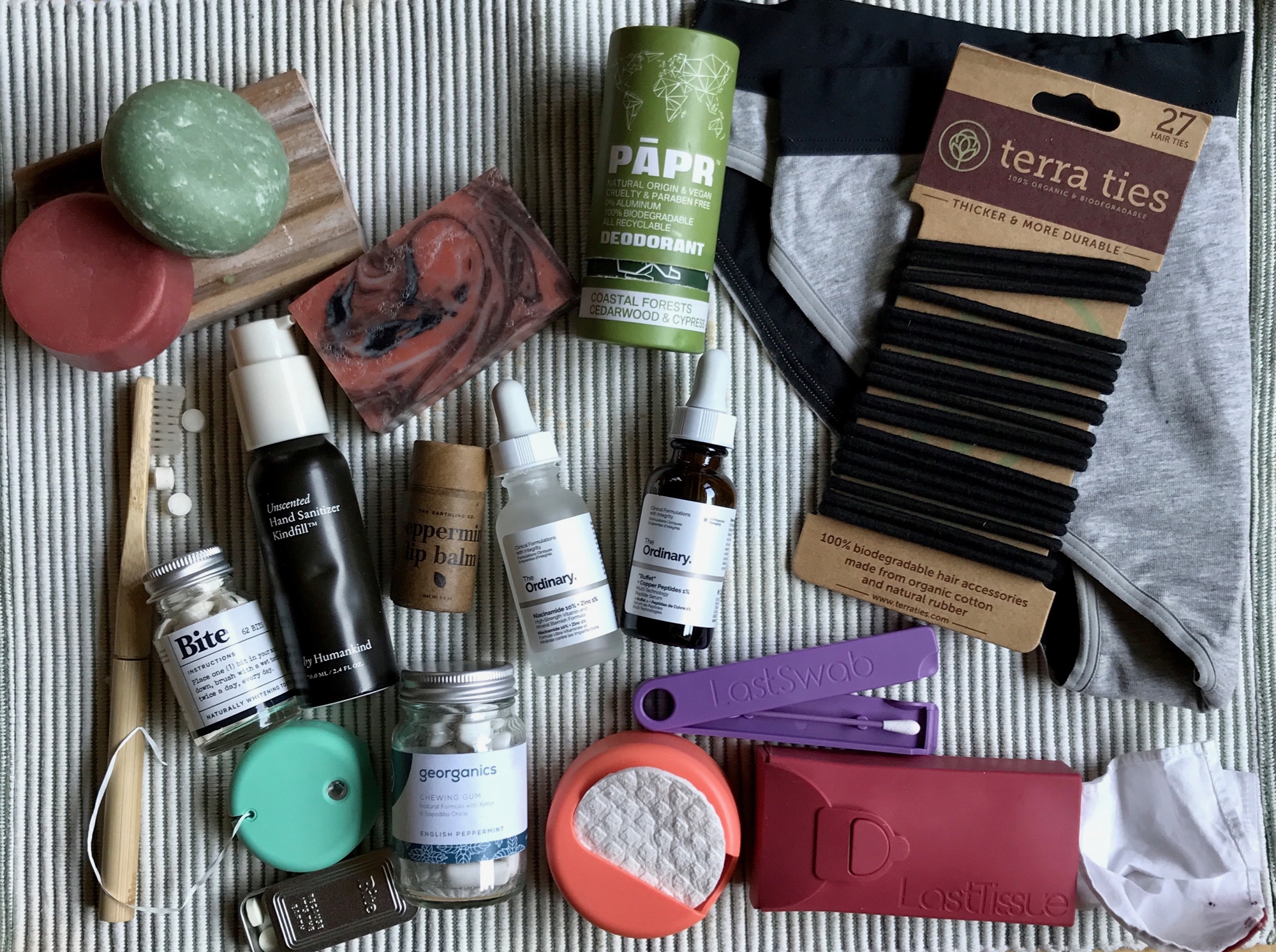
The Ordinary has become my favorite skin care brand, and only part of the reason is that most of their products are sold in glass bottles instead of plastic. (Although they do use plastic dropper lids, which I wish they would give us the option to reuse and order bottles without droppers, like what by Humankind and Activist Skincare do.)
It’s true that glass is heavier to ship than plastic, but it’s infinitely recyclable – unlike plastic packaging which is almost always down-cycled (meaning it’s recycled into something that can’t be recycled again). And unlike most plastic, glass isn’t made from oil.
DECIEM (the parent company of The Ordinary) also has a recycling program through TerraCycle, and it’s one of the few that lets you turn in any brand of beauty product packaging.
By allowing us to drop off empties from any beauty brand, DECIEM foots the bill even for plastic waste that other companies created.
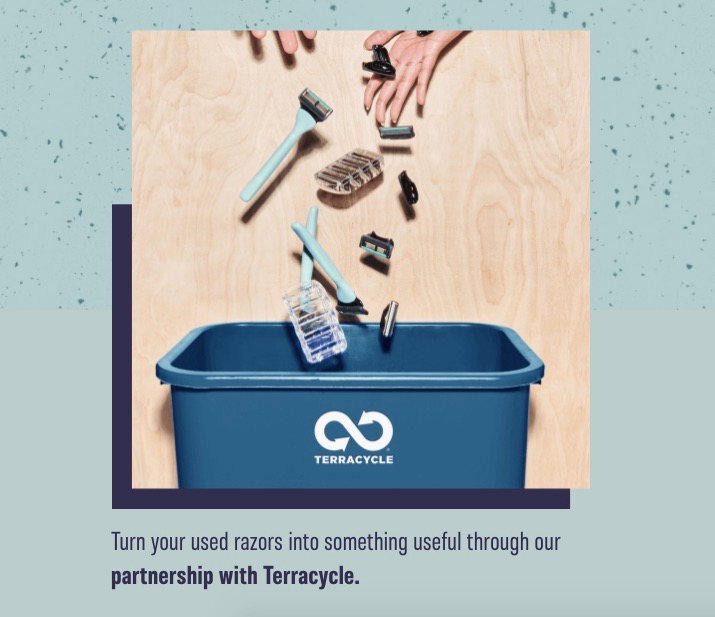
(Gillette does the same with its razor recycling program. BIC does the same for recycling pens, pencils, watercolor sets, and glue sticks.)
That sounds more like a step in the right direction!
But DECIEM’s program is drop-off only, and unfortunately it’s only available in a few of their US stores (in San Francisco, Chicago and New York), five locations in the UK and a few in Canada.
Drop-off only isn’t a bad idea, considering the obvious carbon emissions of shipping small boxes of recyclables around the continent. But it does leave most people without recycling access.
My long-term solution: Glass is widely recyclable without having to use any TerraCycle programs, so for now I’ll keep using products from The Ordinary that are packaged in glass to complement my new refillable skincare routine from Activist Skincare. (They’re both on my plastic-free toiletries master list.)
Also, these products are really effective and really affordable. That means they let me step off the never-ending beauty treadmill of looking for affordable formulations of the ingredients that make my skin behave, buying new products, having them not work, and ending up with a medicine cabinet full of half-empty bottles. Minimalism may sound like just a vaguely sustainability-related buzzword, but embracing the simplicity of buying less is the most old-school sustainability tip you can find.
Other solutions:
You can mail plastic packaging from any beauty brand to Garnier’s recycling program. They ask that you look for a local recycling solution first (logically). But if one isn’t available, you can send them everything from lipstick and mascara tubes, to eyeliner pencils, to the caps from shampoo and conditioner bottles (often the bottles are accepted for recycling locally, but the caps are not).
And you can send any brand of oral care packaging to the Colgate recycling program. (That means toothbrushes, toothpaste tubes and caps, floss containers, and outer packaging for all of the above.)
But I’m on the wait-list for both the Garnier and Colgate programs, as well as the Bic pen program.
Gillette’s was the only one that let me in at the time of writing this – perhaps because they’re promoting their new “sustainable” line of disposable razors:
A Better Shaving Option: There’s a lot of hype around safety razors, and (IMHO) they’re not as easy to use as you may have read. I reviewed four top designs: All use 100% metal blades, which are infinitely recyclable, but the unique, pivoting-head razor from Leaf Shave Co. is the only one I recommend.
Confused yet? Of course! This stuff is incredibly complicated, and fraught with problems.
That’s what many journalists, environmentalists, and sustainability bloggers fail to mention when they talk about TerraCycle and recycling in general: If we’re going to fix our plastic problem, first we need to USE LESS PLASTIC. And second, for the plastic we do use, WE NEED TO MAKE RECYCLING EASY.
And fool-proof, and automatic.
Because recycling is still pretty niche in the US.
I know that might sound crazy, if you live in a progressive city with a good recycling program and high participation rates.
Niche, what are you talking about? Everyone recycles!
But I’m from a place – Northwest Montana – where curbside recycling programs Don’t. Exist. So you have to organize your own drop-offs for the very limited materials that are collected locally. And that is still fairly widely considered hippie-liberal crap that many people don’t even think once about doing.
Here’s the local, underground glass recycling facility in my hometown:
So this conversation that I’m having in my head with you, reader, is even more niche.
And the people who are going to wash and dry their recyclables, print out a shipping label (which might mean a trip to a print shop), and mail them (which might mean another special trip)? That’s an incredibly small club.
So TerraCycle (or any similar company) can be better than relying on municipal recycling – especially if you live where there isn’t much. But are they a long-term solution? No!
Recycling in any form (mail-in, drop-off, curbside pick-up) isn’t the solution to our plastic problems. Using less is.
What’s even more niche? Really expensive recycling.
Most criticisms of TerraCycle focus on their recycling services being both complicated and expensive.
This blog post is a good example, where the author is trying to find a way to recycle her toothpaste tubes. Upon finding there’s a waitlist for the Colgate-sponsored oral care recycling program, she ends up going for a TerraCycle “Zero Waste box.”
(We’re on that waitlist together, but I’m just there for research, because I use these instead.)
I won’t dwell on how ironic the name “Zero Waste Box” is. “Zero-waste” should mean not producing the stuff in the first place. Recycling is just figuring out what to do with waste once we’ve already produced it. And recycling consumes energy; it’s not free, and it’s not just as good as reusing.
Anyway, these Zero-Waste Boxes are another part of TerraCycle’s business – boxes for specific categories of “unrecyclable” items that aren’t accepted in local recycling programs.
How do Zero-Waste Boxes work?
You order a box to be delivered to your door, fill it with a specific category of stuff, and ship it back to TerraCycle with the included shipping label.
More irritating than the name is the price tag: Zero-Waste Boxes cost anywhere from $80 to $459, depending on how big you want them and what you plan to put in them. (The smallest “All-in-One” box is $199.)
Tip: Many of TerraCycle’s boxes are available on Earth Hero (one of my top picks for sustainable online retailers). The prices are the same, except for the largest All-in-One box, but you can save 10% through Earth Hero with the discount code TILTEDMAP10.
I do believe that we need to get used to spending more for sustainable products and responsible packaging (to the extent that we can afford it), and we do pay to recycle through our cities’ garbage collection fees, but still, DAMN. Really?
We should pay a private company at least $200 to get rid of packaging that other companies chose to include with the things we actually wanted to buy?
Paying to recycle my computer is justifiable. I needed it. I bought it. Now I want a new one. That’s on me.
But paying to recycle the packaging I didn’t want and didn’t have the option of saying no to? It’s hard to see how that should be my problem.
Long-term solution: That’s why I write reviews of companies that do give us options: byHumankind lets you say no to extra packaging if you don’t need it (think, plastic pumps on aluminum hand sanitizer bottles, when you already have them at home from your last order). And along with Nelson Naturals, PAPR deodorants, Earthling Co. shampoo bars, and many other brands I’ve written about invest in minimal, compostable, paper-based packaging.
To recap:
- Sustainable packaging is expensive, so most brands don’t use it.
- Setting up good recycling systems is expensive, so most cities don’t do it.
- Going out of our way to recycle our garbage is expensive, so most people don’t do it.
- Mandating better recycling and more sustainable packaging would be expensive for spineless lawmakers who get campaign funding from oil companies, so most of them don’t even try to do it.
Yes, TerraCycle is complicated. Yes, it’s expensive. And yes, it can make you wonder whether the company is legit, or whether there’s even any point in trying to recycle with them.
But when you start digging into the details, any kind of recycling is complicated, expensive (someone’s paying for it), and can make you wonder whether there’s any point to it.
So no, I don’t think TerraCycle is a nefarious company. I think it’s yet another band-aid on a recycling system that never was built to be a long-term solution to our over-packaging problem.
It might be impossible to know the extent to which TerraCycle is a benevolent social enterprise, and the extent to which they’re profiteers. But that isn’t even the point. TerraCycle isn’t the problem; the problem is that we expect them (or someone like them) to be the solution.
What do you think? If you have questions, comments, or sustainable brands you’d like me to review, drop them in the comments below!

Plastic-free Product Reviews:
- The Lomi kitchen composter review
- Activist Skincare review
- Plastic-free face wash options
- Safety razor review and comparison (PLEASE read this one before spending money on safety razors!)
- Sustainable Gift Ideas
- Shampoo & conditioner bars from Earthling Co.
- Lots of other shampoo & conditioner bars I’ve tested
- PAPR, byHumankind and Bite deodorant review
- Review of Thinx and the best Thinx alternatives
- Several brands of toothpaste tablets (some great, some never-again)
- LastObject products: Q-tips, cotton pads & tissues – and tips on how to avoid greenwashing (AKA fake-sustainable companies)
- The best cleaning & laundry products, sans plastic
- Everything I learned in a master’s degree in sustainability!
PS: Useful TerraCycle Links:
Because I don’t think this directory exists on their website, here are all of free (brand-sponsored) TerraCycle recycling programs available in all the countries where TerraCycle operates:
- the US
- Canada
- Brazil
- the UK
- Australia
- New Zealand
- Germany
- France
- Ireland
- Norway
- Denmark
- Netherlands
- Austria
- Spain
- China
- South Korea
- Japan
- And here’s a directory for other types of TerraCycle recycling programs (not necessarily free ones) available in other countries.