Possible Microplastics? The Drama of PVA
When you Google “plastic-free laundry detergent,” brands like Dropps and Earth Breeze are right at the top. But for years, ever since I started researching these brands, there’s been some controversy about their plastic-free status.
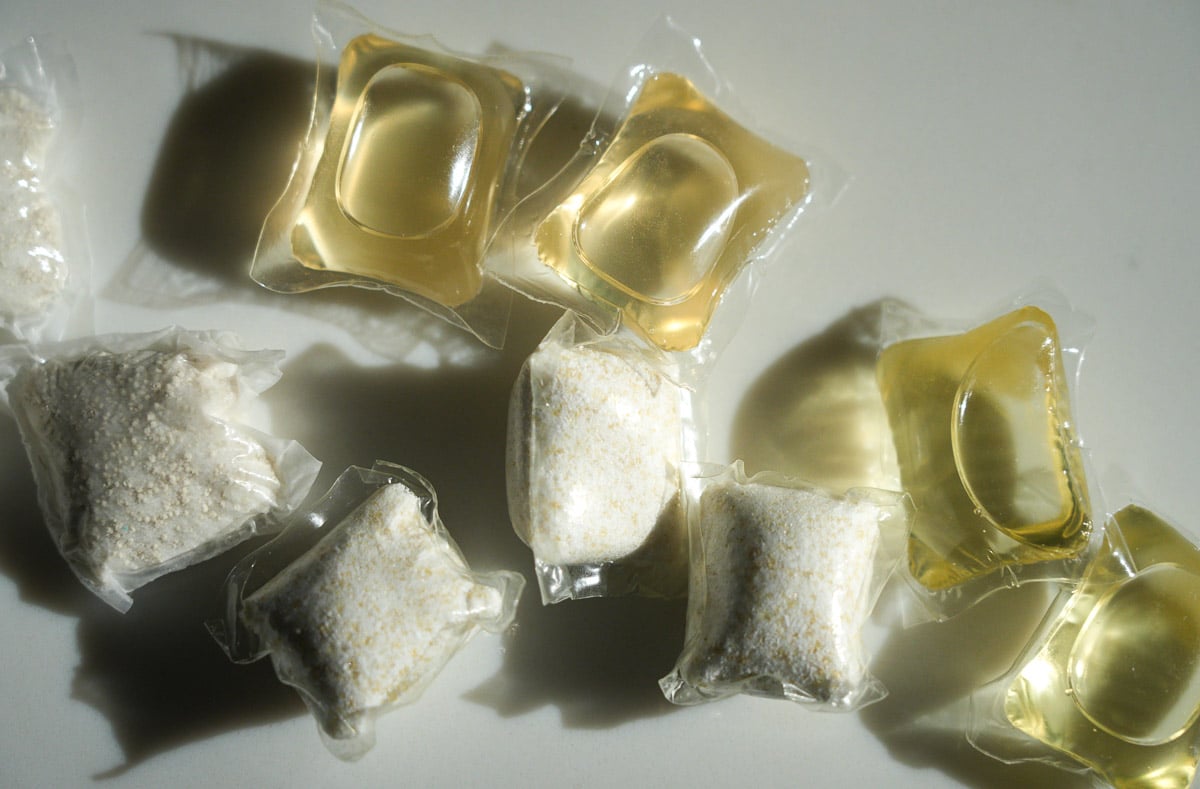
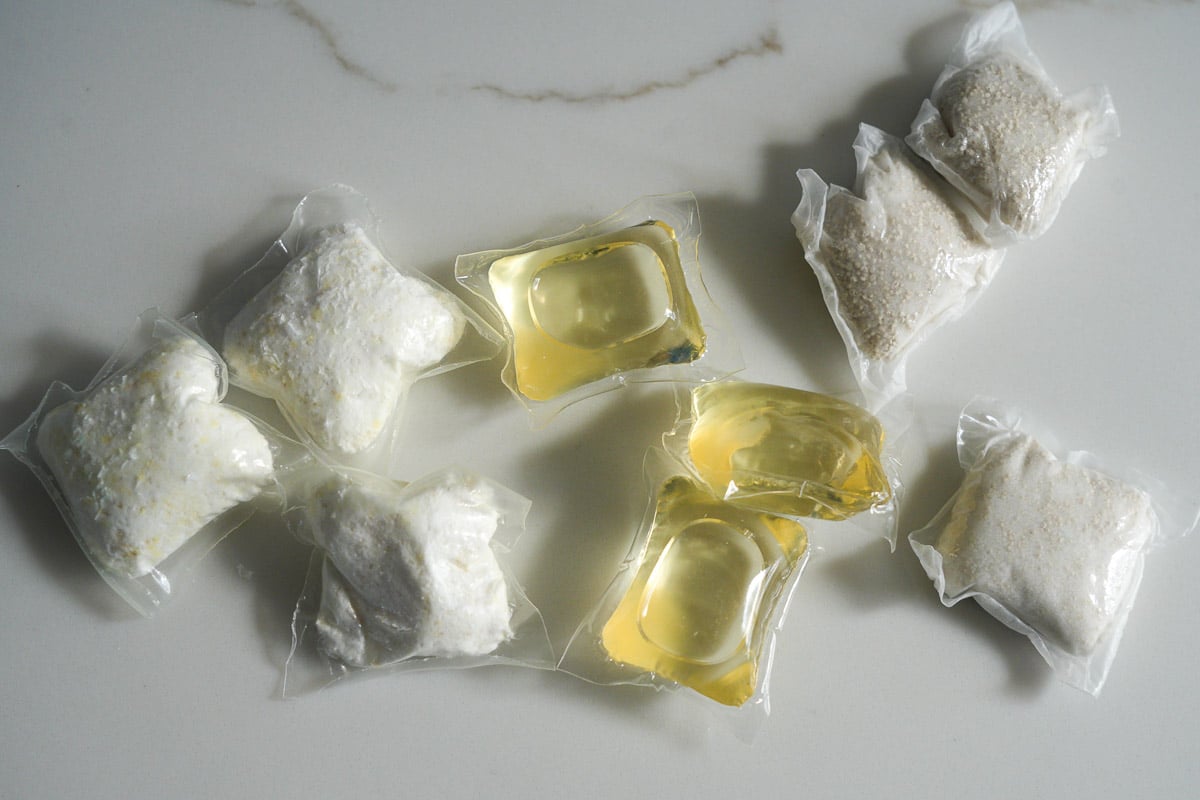
The catch is that they use PVA, which stands for polyvinyl alcohol. (It’s also called PVOH.) PVA is a synthetic film that Dropps pods, like most brands, are covered in. “Synthetic” in this case means it’s a petroleum product. (Although some companies are working on creating plant-based PVA.) But in the meantime, we don’t love fossil fuel products.
Is PVA plastic? And if not, is it still a problem?
The most realistic answer is probably that we don’t know yet. The evidence is not definitive.
But since I have a master’s degree in sustainability and write reviews of sustainable products – including some that contain PVA and some that don’t – I wanted to dig into this more. This article is here to lay out everything I’ve learned, backed by science.
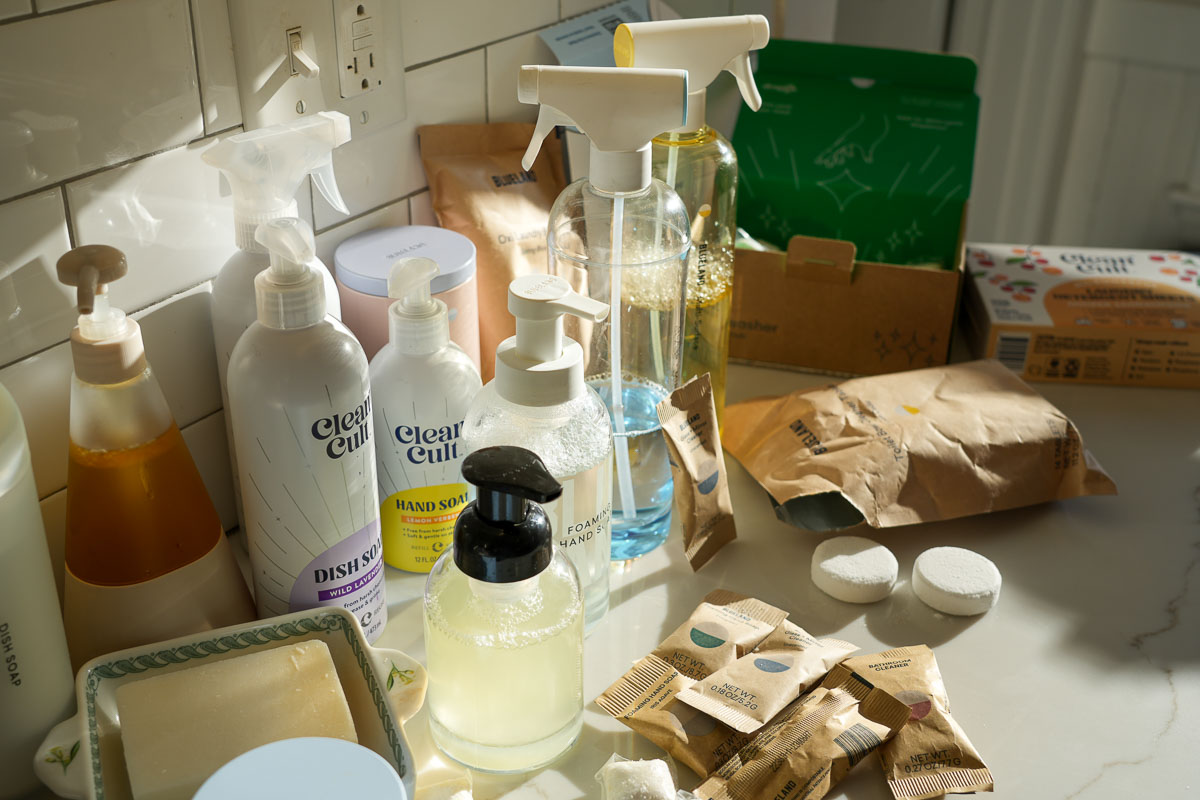
(For example, PVA is an ingredient in Earth Breeze laundry strips, which I recommend for travel. Pretty much the only cleaning products I’ve found without PVA are from Blueland – at least when it comes to dishwasher and laundry detergent pods. Other PVA-free options are laundry powders, like this one.)
For details on these, see my Dropps review, my review of Blueland vs Cleancult, and of Earth Breeze vs. TruEarth.)
Is PVA in everything?
There are many different types of PVA that dissolve in different ways and are used in tons of products. PVA is a common ingredient not only in dishwasher pods and laundry detergent pods (and detergent strips) but also in extended-release pills, face masks (the skincare kind), fishing nets, eye drops, medical sutures and bandages, mascara and school glue.
It’s even used in some foods, apparently including “dairy-based desserts, confectionery and cereal products and dietary supplement tablets,” which seems like it’s taking it a bit far?
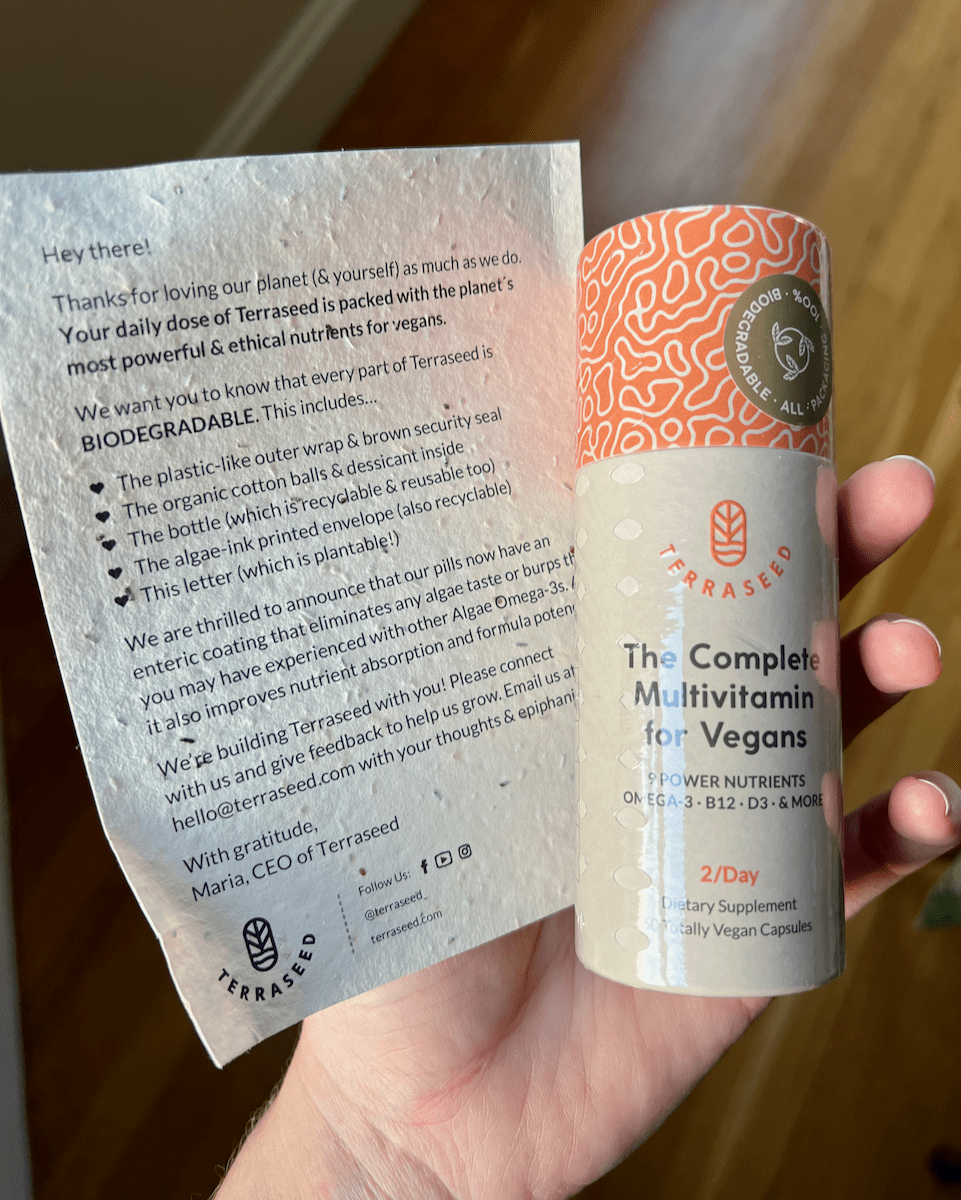
(But there’s no PVA in the vitamins I’ve tested and recommend, which also skip the plastic packaging.)
So even though I just don’t love the idea of eating PVA, that’s of course not how we should be thinking about these issues. We should be looking at real science. Not vibes.
Doesn’t PVA just dissolve?
The PVA film that dishwasher or laundry tablets are wrapped in should disintegrate, but only when there are certain microbes present. Those microbes are added by city water treatment plants, but studies have shown they might not be enough.
I couldn’t find any information on whether PVA biodegrades in rural homes that use septic tanks, where no special microbes are added.
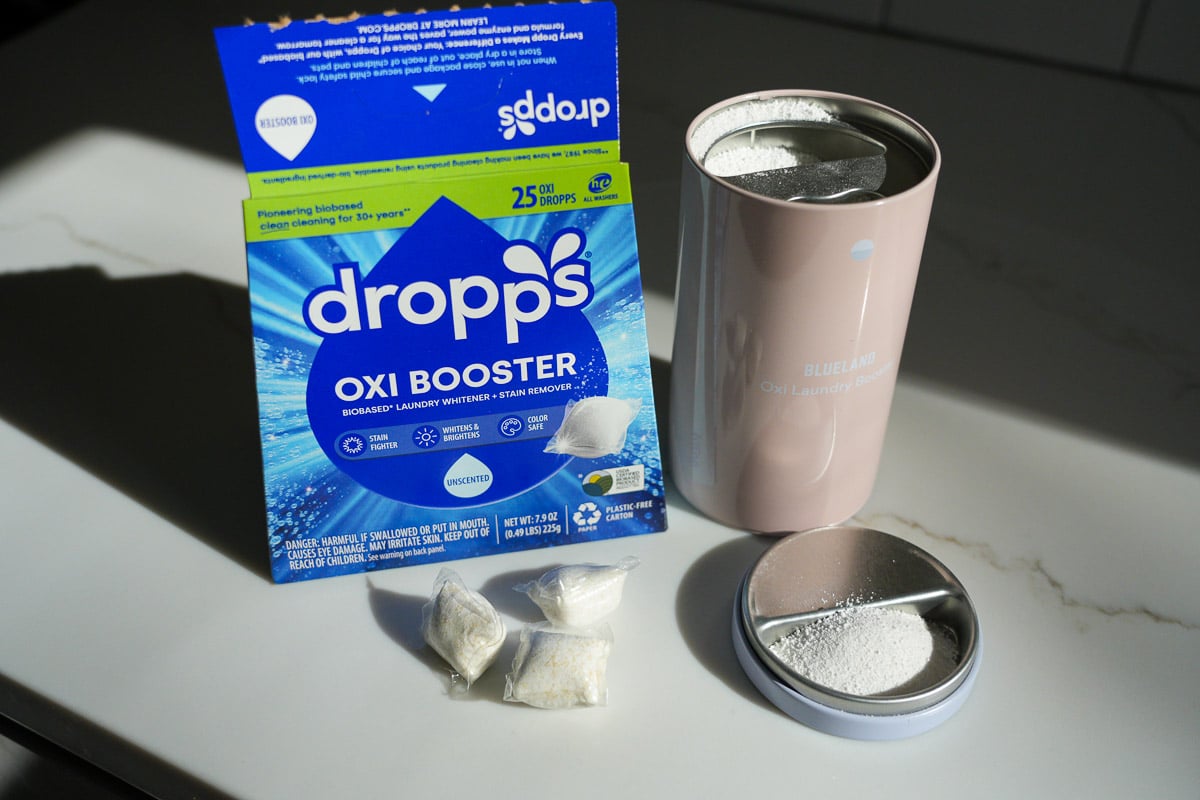
There’s also debate about how much of it actually breaks down even in water treatment plants. That’s why Blueland’s laundry pods are “naked” tablets, with no PVA covering. (They say more than half of PVA never dissolves and is a common water and soil pollutant.)
So it’s possible that some PVA from Dropps, and other pods, gets washed into rivers and lakes. Or it’s possible that PVA is totally safe. Honestly, there just isn’t a lot of conclusive research out there about this, which is frustrating.
So are the scientists worried?
It seems scientists are not officially worried about PVA, but they’re not confident in it, either. I couldn’t find any rigorous scientific research or any government agency saying PVA is a problem. However, it’s clear that more research is needed.
Yes, studies have found PVA in human breast milk and later in drinking water. But remember that PVA is not PFAS – the toxic forever chemicals that have been found in the same places, and are known carcinogens. (PVA is not a known carcinogen.)
The US Environmental Protection Agency (EPA) has PVA on its Safer Chemical Ingredients List (including after giving a second look in 2023, thanks to the petition Blueland sponsored).
The FDA has PVA on its Generally Recognized as Safe (GRAS) list.
And it’s been approved as safe by Canada and the European Union. (And Europe is known to have much stricter consumer safety laws than the US. They tend to play it safe and keep anything questionable out of food, skincare and other products.)
Blueland & PVA legislation
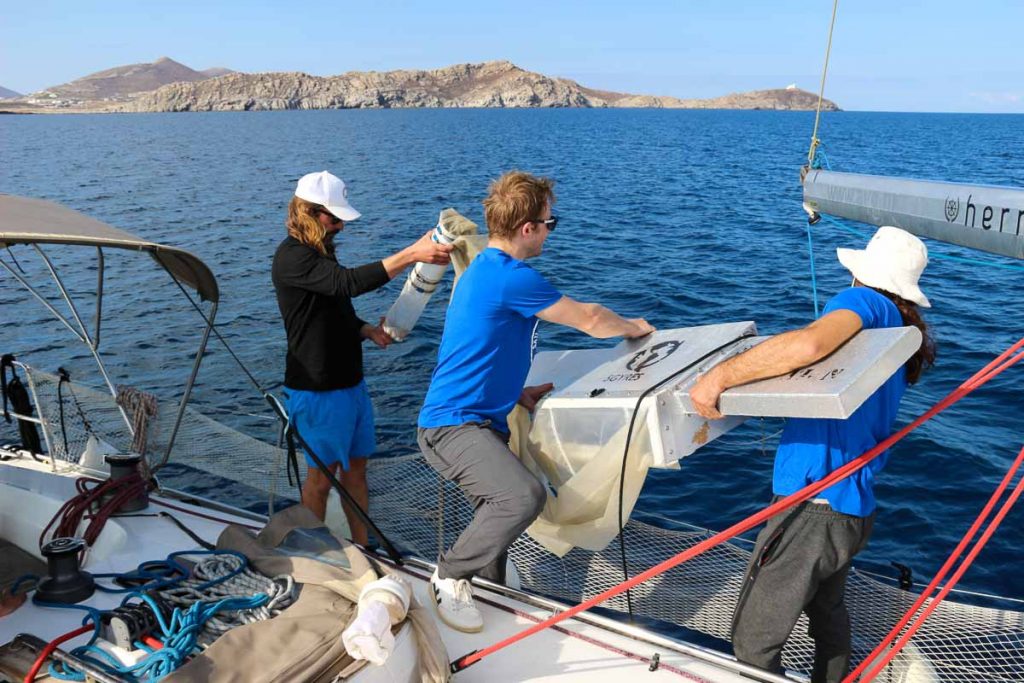
But there’s still a lot of pressure against PVA. Basically, brands like Dropps say the PVA they use dissolves well. Blueland says it’s possible that most PVA doesn’t actually dissolve the way we want it to, so it’s better to avoid it.
And in 2023, Blueland petitioned the EPA to ban PVA (which they again declined to do, that same year).
The company has helped promote a bill to ban the sale of products with PVA in New York City. And they even sponsor some studies on PVA.
Now, I really don’t think Blueland is going to all this effort just to promote their own PVA-free products. They have all the signs of what I consider to be a very ethical company (including being a B Corp and having other sustainability certifications, and going to the effort to be plastic-free, which isn’t cheap.)
I think they’re doing all this for the right reasons and trying to be cautious.
Digging into the science on PVA
Out of both editorial caution and curiosity, before I first started talking about these brands back in 2020, I asked all of the companies I’ve reviewed who use PVA for more info about the ingredient, and their choice to use it. The only one who responded was Dropps.
In several emails with Dr. Karen Iveson, Dropps’ VP of R&D, she emphasized two points:
- No, PVA does not dissolve into petroleum or microplastics.
- On the topic of septic tanks and microbes, she added this: “There is a significant body of scientific research dating back 50 years that describes a large variety of microbial species that break down the monomer molecules. Water treatment facilities and septic tanks are all rich in bacteria that break down organic materials very effectively.”
So their point is that PVA is probably safe for the environment, even if you have a septic tank.
Since then, the New York Times has reported that Dropps was working on developing bio-based PVA, which didn’t seem like a vote of confidence in the ingredient. (Bio-based PVA would be a replacement film for detergent pods made of plants, instead of petroleum.)
Fast forward to 2025, and I followed up with Dropps.
Dropps’ PVA Update
Dropps has always clearly said that the PVA they use dissolves well, and they said it even more clearly back in 2020, when I was able to talk to an actual expert at the company. At the time, they also had at least one blog post on their site explaining why PVA was not a problem.
Now, the link to their info page about PVA has been taken down. I reached out to them for an update, and they wouldn’t put me in touch directly with their science or R&D department. They just shared this answer, which they said came from the R&D people:
“Dropps is always working on furthering innovation in the Eco cleaning space, and that is no different when it comes to biobased film technologies! We are actively working with numerous suppliers on both PVOH and non-PVOH film options. Our goal is to make meaningful progress ASAP in this area, with the ultimate goal of having a product that maximizes biobased content while leading the industry in laundry and dish cleaning.”
Getting a second opinion
Then I called my sister-in-law to chat about this, because she’s a chemical engineer and I wanted to see if another professional agreed.
She threw a lot of chemistry talk at me, and emailed me diagrams of molecules, and the conclusion I pulled from it all was this:
- True, PVA does not break down into microplastics (good!).
- But it does break down into something (ugh). And whatever that something is, we don’t yet know what effect it’s going to have out there in nature.
Bottom line on PVA:
I’ve struggled a bit with what conclusions to draw on PVA. After looking at the studies and talking with scientists, I simultaneously think it’s probably not that bad, and it definitely needs to be studied more.
The one thing we do know is that even if PVA isn’t perfect, it’s better than buying laundry detergent in plastic bottles. If you’re still reading this far, I know – that’s a completely unsatisfying answer. But when even a chemical engineer says, “I don’t have any reason to think it’s a problem, but I don’t have any proof that it’s not a problem,” well, that’s when I know that we probably have bigger fish to fry.
And I absolutely want to avoid falling into the “clean living” school of online philosophy, where avoiding ingredients with names too long to pronounce takes precedence over following actual science. It does seem that at this point, a lot of the fear of PVA comes from that mentality — not from evidence.
The evidence currently does show that not all PVA breaks down completely in septic tanks or waste water treatment plants. But it doesn’t show that it actually causes any problems if it doesn’t break down.
Guilty until proven innocent? With what we’ve learned about PFAS and other former “miracle” ingredients, maybe that’s not a bad attitude.
If switching to a product that uses PVA means someone stops buying one in plastic packaging, that’s still a good trade for the environment.
…But with all the sustainable cleaning brands I’ve tested, that’s not a trade we even have to make.
Here’s what I’ll keep buying:
While there isn’t hard evidence that Dropps (and all the other cleaning brands that use PVA) are not perfectly safe for the environment, there are products out there that are both PVA-free and have plastic-free packaging.
If you want to be 100% cautious on the issue, stick with Blueland for laundry detergent and dish soap without PVA. That’s what I’m doing.
But for travel, I’m continuing to use Earth Breeze sheets for laundry detergent for their lightweight convenience. They’re also a more sustainable choice because of how concentrated the strips are, which means they’re lightweight and require less energy to ship.
Our Most Popular Sustainable Product Reviews:
Are you in the market for sustainable cleaning products or other plastic-free swaps? I’ve tested lots! Check out these reviews:
Plastic-free Haircare:
- Dip shampoo bar review (the fanciest bars, but are they worth it?)
- Viori shampoo bar review
- Everist review: Plastic-free shampoo that’s NOT A BAR
Plastic-free Skincare:
- Rebrand Skincare – the best REFILLABLE skincare products?
- The only Plastic-Free Razors that didn’t leave me bloody
- After testing dozens, this is the best plastic-free toothpaste
Plastic-free Cleaning and Home:
- Change Your Toilet Paper, Save a Forest!?! [We tested Bamboo vs. Recycled TP]
- Dropps review
- Cleancult vs Blueland review – which is the most sustainable cleaning brand?
- Tru Earth vs Earth Breeze – Laundry sheets test
Good sustainability reads: