Sustainable Clothing: 10 Mindset Shifts That Will Slowly Change Your Wardrobe for the Better
If you let it, this sustainable clothing guide can fix your clothing waste problem. (Yes, you have one. We all do.)
NOTE: this is NOT a buying guide. I have a separate post about sustainable clothing brands and what makes each one better. If you’re looking for shopping advice, start there. Instead, this post is about powerful mindset shifts we can all adopt to slowly but surely make more sustainable clothing choices.
Our clothing waste problem is, to quote one of my favorite authors, part of the “ever-more-desperate Western way of life.”* Buy cheaper to buy more, don’t worry about where it came from or where it will go.
The polar opposite of sustainable clothing, in short.
(* that quote is from Michael Pollan’s book In Defense of Food. As you can guess from the title, he wasn’t talking about clothing, but the shoe fits!)
Do you know how much clothing the average person in the US throws away every year? Eighty-two pounds! (Europeans do a bit better, but still not great.)
If you find that statistic shocking, you might at least feel better knowing that it’s unnecessary. No, that’s not just depressing – it means we can do something about it.
You’ve probably heard of the “3 Rs” slogan of sustainability: Reduce, Reuse, Recycle?
Well, the sustainable clothing world has added several more Rs: Reduce (or Refuse), Reuse, Resell, Restyle (or “upcycle,” but that doesn’t fit the theme), Rent and, only as a last resort, Recycle.
Today, I’m going to go over my personal take on those ideas and a few others, how to actually implement them in your closet following the Tilted Map philosophy.
Who’s writing this?
Hi, if you’re new here, my name’s Ketti Wilhelm. (No AI here, just a real person!) I founded this website in 2019 after finishing my Master’s Degree in Sustainable Business and Energy.
The idea behind Tilted Map has always been to showcase more realistic ways to live more sustainably, from clothing to travel to cleaning and skincare products, and a lot more.
I’ve also lived abroad in several countries, and I love extracting lessons we can all use, but might not have thought of, from my experiences in China, France, Italy, Mexico and beyond.
It’s my way of bringing something useful home from my travels, and sharing it with you!
Before I moved abroad, I was an activist fighting against sweatshop labor practices. I even helped convince my university to cut a contract with Adidas, after the international giant failed to pay severance after laying off workers in Indonesia.
That win taught me a lot about sustainability in the clothing industry, how social and environmental issues are profoundly linked, and just how much power we have as consumers.
Now, let’s jump into this guide to more sustainable clothing!

1. Buy less clothing. Seriously though.
That first of the three R’s, “reduce,” is deceptively simple. It sounds obvious, but it can be the hardest strategy to implement.
I think it’s more helpful to think of it as “refusing” instead of “reducing.” Why? We have so many options, and so many opportunities to buy clothing we don’t really need. We need to get better at saying “no.”
Repeat outfits more often (and keep repeating them for years).
Make sure you love an item and need it before you buy.
Wait a day, a week, or a month to see if you forget how much you “need” the item, then go back for it if you still remember.
This first step isn’t about doing better research, or buying your way to a more sustainable closet. It’s a profound mindset change, in a culture that encourages us to always be buying.
(Sort of like my strategy for packing lighter, which, if you haven’t already seen it, is a must-read! The philosophy overlaps a bit with this.)
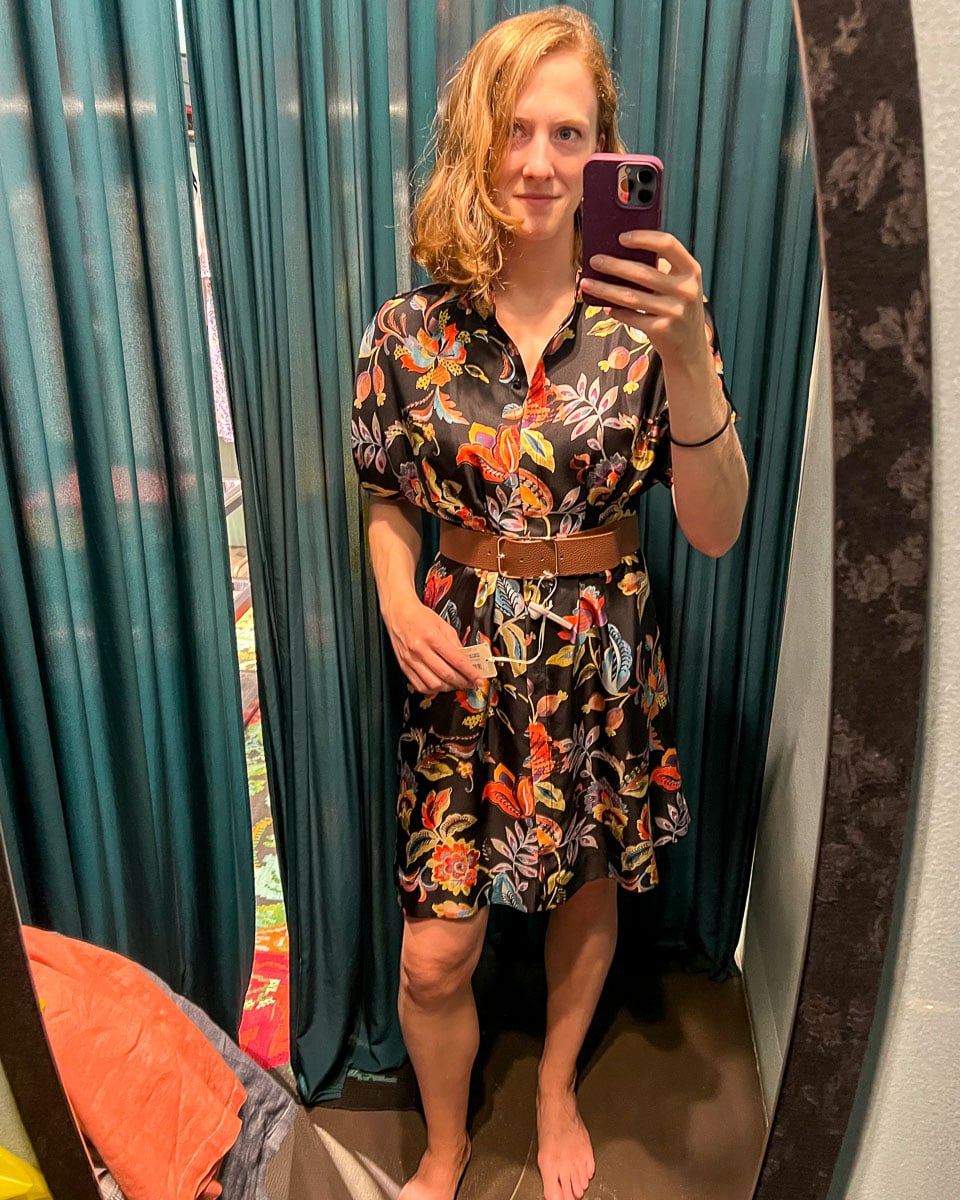 Trying on a 100% silk dress in Milan in 2022 – one of the last items I bought new.
 …wearing it at a winter wedding with merino wool leggings.
 …and years later for New Years in Mexico.
The pics above are just a few of the many times I’ve worn my “fancy travel dress,” which I take almost everywhere. It’s 100% silk, super packable and one of the last items I purchased new. (It even goes great with merino wool leggings when I need a little extra warmth.)
2. Remember, there is no “away.”
Here’s a powerful fact to remember that will certainly help you implement Step One: Throwing clothing or anything else “away” is a made up concept.
Ultimately, there is no “away.” There’s only the landfill.
And giving clothing “away” doesn’t often work, either.
Thrift shops end up either throwing away or recycling a lot of what’s donated to them. Yes, recycling clothing is better than sending it to the landfill (see below) but textile recycling isn’t really the solution we think it is.
(More about that in another article, coming soon!)
So next time you catch yourself thinking, “Oh, I’ll just buy this and give it away if it doesn’t work out,” remember it’s not that simple.
Finding organizations that are looking for specific items you can donate can be useful, but just dumping things at Goodwill isn’t as effective as you might hope.
[ For more, see this guide to where to donate clothes besides Goodwill, from Lily, a friend and fellow sustainability blogger at Imperfect Idealist. ]
3. Take responsibility for every item you buy.
Following through on the logic of Steps One and Two, this is probably the most important idea on this list.
It’s a massive mindset shift from being a simple consumer or shopper, to an owner of each item you choose to purchase.
I think of it almost like being a pet-owner: Once I agree to take this fluffy puppy or fluffy sweater home with me, I’m responsible for it all the way until the end.
I know, that’s a big thought. You don’t have to take it all the way there, but let that idea settle in your mind for a second.
Once you buy something, there is no away. So how will you make sure it gets taken care of?
(And please don’t hate me for comparing your best friend to a sweater.)

4. Wear natural fibers.
The biggest sustainability benefit of natural fibers (like cotton, wool, silk, and linen) is that they’re 100% biodegradable.
(That is, as long as the item is made of 100% natural fibers, not blended with polyester, for example. Make sure to check labels!)
No, biodegradable clothing doesn’t mean it’ll fall apart in the laundry. It means it won’t create microplastic pollution when you wash it.
Later, when your clothes are truly at the end of their lives (and can’t be repaired or resold) they will eventually break down in a matter of years. (Not centuries, like the plastic fabrics, like polyester, acrylic, etc., which leave behind trails of toxic microplastics.)
Here are some brands I recommend for shopping natural fibers:
Merino Wool:
Unbound Merino is one brand you’ve certainly heard me talk about before, and you’ll hear me do it again, for many reasons. Their clothes are high-quality, and most items are made with 100% merino wool.
Merino wool is a particularly special natural fiber: It’s moisture wicking, naturally antimicrobial, naturally wrinkle-free, and allows you to wash your clothing less often (saving resources, and making it perfect for low-waste travel).
 Unbound Merino
Unbound Merino makes my favorite packable travel clothes. They don't wrinkle at all (one of the virtues of good quality merino wool), and they stay un-smelly for days and even weeks between washes.
Plus, their designs are elegant and stylish (no logos), and easy to mix in with your wardrobe.
Compromises:
While most of Unbound Merino’s styles are 100% merino wool, they do use some fabrics that blend merino and synthetic fibers. (But I only go for the 100% merino pieces, for reasons I laid out in my Unbound Merino review.)
Some components are plastic, such as polyester threads for seams and labels. I’ve asked them about these factors and they were very open in sharing the research and testing that they’ve been doing to try to remove all synthetic components from their clothing.
They’re still making high-quality clothing that’s doing better than 99% of clothing brands. I wear their clothes pretty much daily!
Alpaca & Organic Cotton
If you’re looking for a company that goes that final one percent, I would look into AYA. I haven’t worn their clothes yet, but they use 100% natural fibers (no polyester threads or labels).
Plus, their clothes are all handmade in Peru, where the founders’ family is from. They use sustainable 100% alpaca wool and regenerative, organic Pima cotton that are grown in the same country where the pieces are sewn.

[More: Check out my list of more sustainable clothing companies.]
5. Buy better quality and more sustainable clothing brands.
I could just say “avoid fast fashion.” That industry produces trash, along with a shocking 10% of global greenhouse gas emissions. (Far more than the climate impact of flying, even.)
Instead, put your clothing budget toward fewer pieces that are higher quality.
They’ll last longer for you, and they’ll have a better chance of having a second life for someone else once you’re done with them.
My list of sustainable and ethical clothing companies shows you specific examples of what to look for in sustainable clothing brands.
6. Make shopping a game of strategy, not speed.
Put more simply, make it a challenge to find the right items you’re looking for, not just to buy them.
Yes, I’m talking about thrifting and buying items at vintage or consignment stores.
But this is a much more fun way to think of it than just saying, “I have to buy used clothes.”
It’s a game of strategy because you don’t have a guarantee of what you’ll find in a consignment store (or whether it’ll be your size. So I get that this can be harder for some people depending on your body shape. But give it a try before you write it off.)
Plus, instead of just clicking “add to cart,” thrifting and consignment shopping means getting out into your local community and often supporting small businesses. The effort is a lot more, but the rewards are a lot more, too.
On the flip side, make it a truly circular economy by also reselling your clothes when you don’t want, need, or love wearing them anymore.

Travel Bonus:
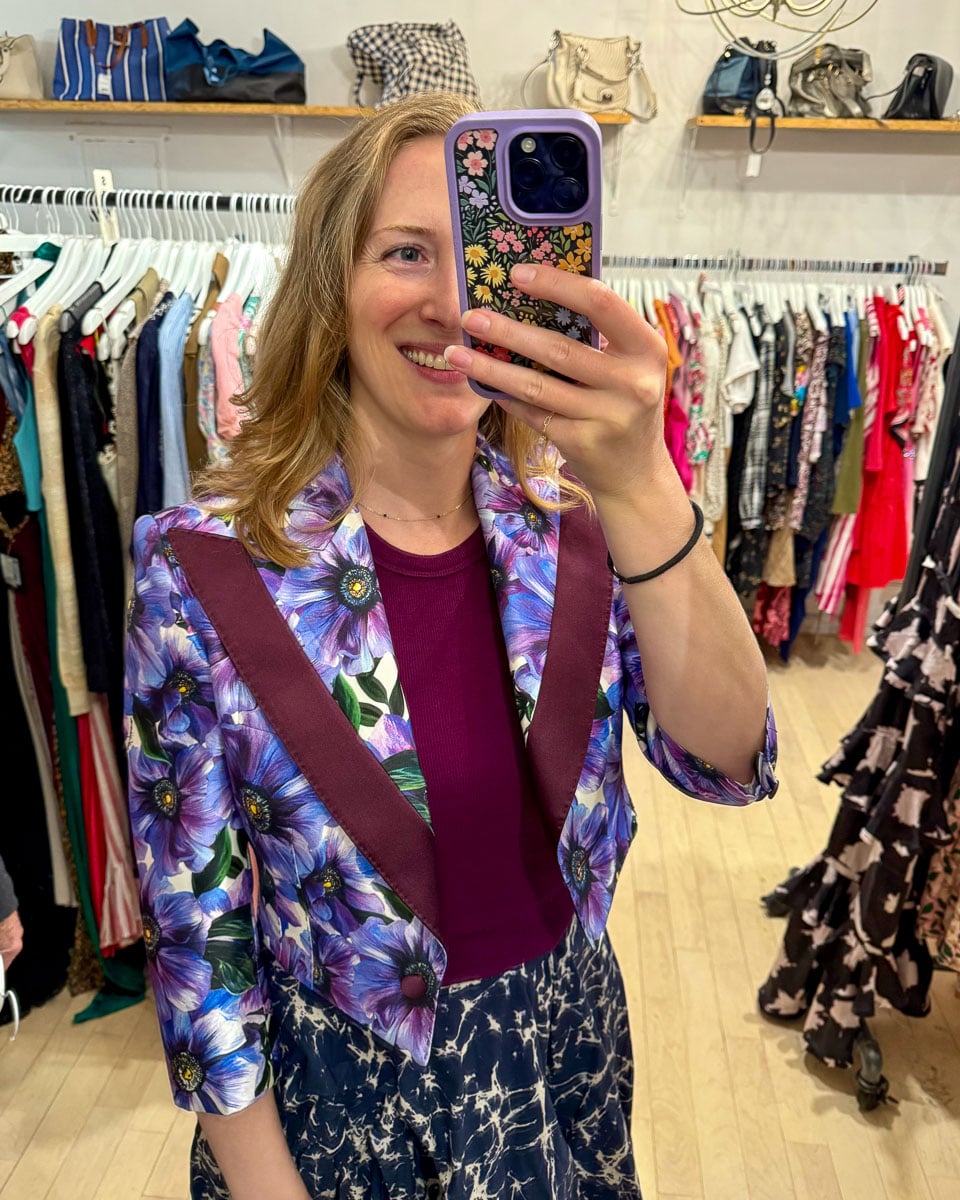
And consignment shopping is one of my favorite things to do in Milan (a city I’ve spent years in). It adds a fun dimension to lots of city trips, getting me into neighborhoods I might not otherwise visit.

7. If it’s broke, fix it!
One of the benefits of buying higher quality clothing is that they are actually worth repairing, and possible to repair.
Whereas quality clothing will go on being useful to someone, whether it’s you or someone else, for years to come.
Examples: Ultra-fast fashion brands like Shein and Temu use fabric so cheap and low-quality it often won’t even hold up to being repaired. Boots and shoes with cheap, molded soles also usually can’t be re-soled, whereas higher quality shoes with Goodyear welts, for example, can be repaired many times.
Don’t know how to repair your own clothes? That’s fine…
Support your local tailor and cobbler!
They’re usually small businesses, run by local people who have skills that we, as a society, are just now remembering to value. Help keep them in business before those shops disappear.
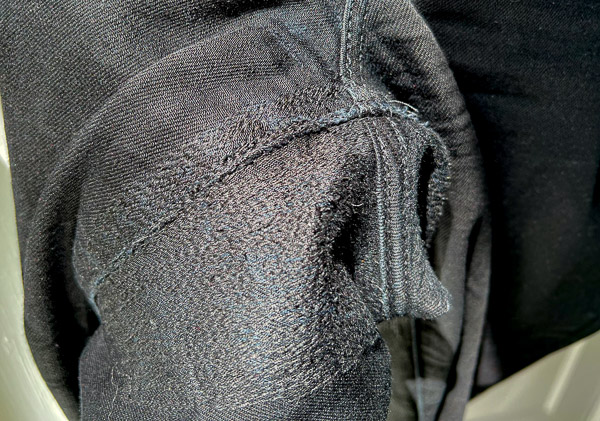
I’ve been sending my jeans to this family business for years to have holes repaired.
And Patagonia offers free repair workshops where they’ll fix any item of clothing you bring in – from any brand – for free. (It’s not a small business anymore, but it is a good one.)
Or, if you’re looking for a useful, screen-free hobby, learn to sew!
And beyond simple repairing is “upcycling,” or redesigning old clothes into new styles. (There are a few great upcycling designers in my sustainable clothing brands list.)
8. Why own when you can rent?
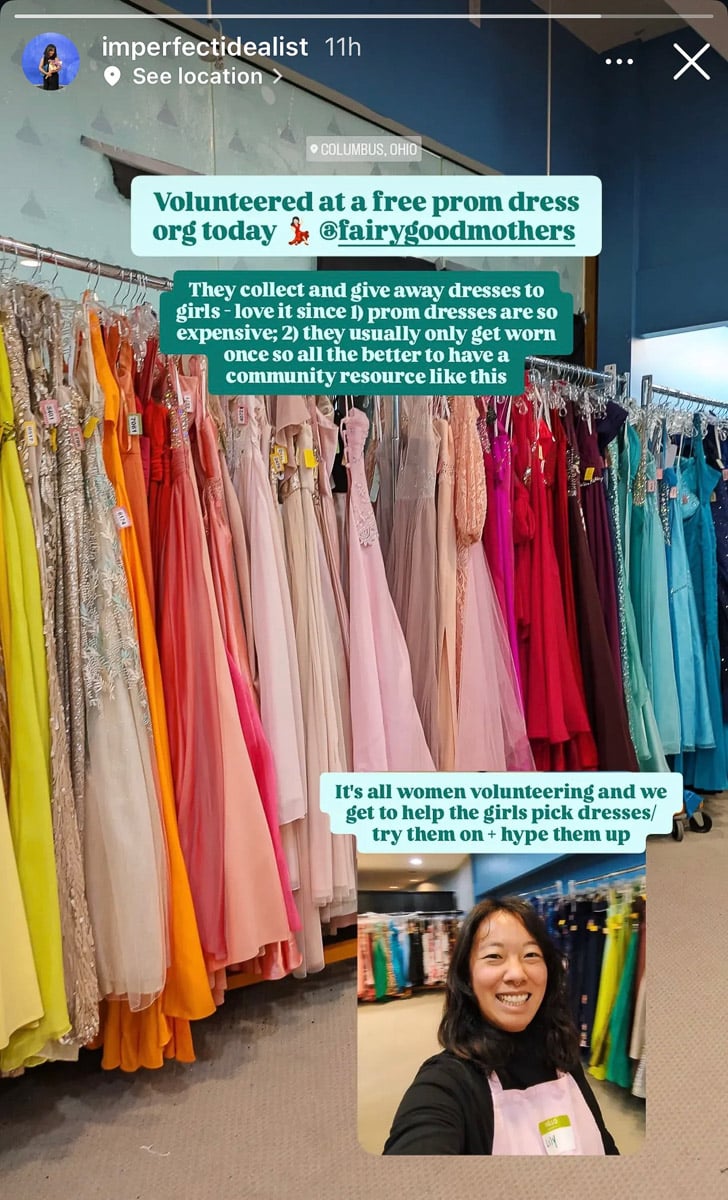
Remember how the boys rented tuxedos for high school prom, while the girls bought their own dresses? Yeah, those rented tuxes were actually a great idea.
Fast forward to this decade, and the concept of clothing rental has gone way beyond the local tuxedo shop! Rent The Runway is for formal wear and designer pieces. Nuuly is more for everyday wear. Armoire is all about professional, office-appropriate clothes.
They can be great to experiment with new styles, or satisfy your craving for something new, without buying something new.
(And RE: prom, I could go off on a “pink tax” tangent here, about how women are sold on needing to purchase things to be beautiful, and our clothing being part of our identities. While men are allowed and encouraged to be practical and thrifty, because, who cares, their looks aren’t part of their identity anyway, right?)
PIC – prom dress
9. Recycle your old clothing so it doesn’t go to a landfill.
Even the roughest of old textiles can still be put to good use. (And recycling fabric reduces the amount of new material that needs to be farmed, mined, and manufactured, with all the energy, water and resources that requires.)
Recycling is the last-resort solution, only for old clothes that are past the point of ever again being useful to anyone. I’ve been saving some up myself.
I’ve got bags of underwear that I’ve worn so long they’ve become transparent (not in a sexy way, unfortunately).
I’ve got socks that are more hole than sock.
Where to recycle old clothes?
So I did some research on the best clothing recycling programs that would take my stock piles and turn them into something useful.
My favorites so far are the Smart Wool program for recycling socks (any and all socks accepted! Any material, as long as they’re clean. Then they’re made into new recycled socks.)
And I’ve been using this mail-in textile recycling program for everything else.
[More: Stay tuned for a follow-up article with more about textile recycling. I’m also planning to visit a clothing recycling center and will share what I learn with my email list!)

10. Support better laws.
I know a lot of you will read this and think “these fast fashion corporations are making billions of dollars exploiting people and selling us cheap crap that destroys the planet. Why is it our job to fix it?”
Yes, of course, I absolutely agree. It isn’t our fault, and it shouldn’t be our responsibility to fix corporate misbehaviors.
But it is our problem, since we live on this planet together.
And let’s be honest, it’s 2026 and the government doesn’t seem to be fixing many of the problems that it should be fixing. So we’d better do what we can.
After all, this is capitalism, baby.
For all its faults, it does give us the opportunity to vote with our wallets by participating in sustainable systems like clothing recycling programs, and thrift, consignment and buy-nothing economies.
These are powerful first steps to encourage both lawmakers and corporations to behave better. Because they might not want to listen, but they can’t ignore our votes or how we spend our money.
Before You Go:
Read more about how to vote with your wallet and find more sustainable clothing in these articles:
- 15 Realistic Tips for Traveling with Less Waste
- Why Is Travel Political? (Another example of voting with your wallet)
- Unbound Merino Review – a wool wardrobe for travel? (Plus VIDEO)
- My Black Friday Strategy: How to shop sustainably without the guilt
- 22 Sustainable Clothing Brand and What Makes Them Better