Pollution, Communism & China: Teaching the Documentary “Under the Dome”
This post is about my experience discussing communism and pollution with my Chinese university students after showing “Under The Dome,” a Chinese documentary about pollution by journalist Chai Jing, in my classroom.
This was a bad week for people in China who like journalism.
This was the week when a cruise ship sank on the Yangtze River and killed 440 people with no explanation, but Chinese media were forced to change the headlines to “18 People Rescued From Cruise Ship.”
Chinese Censorship 101
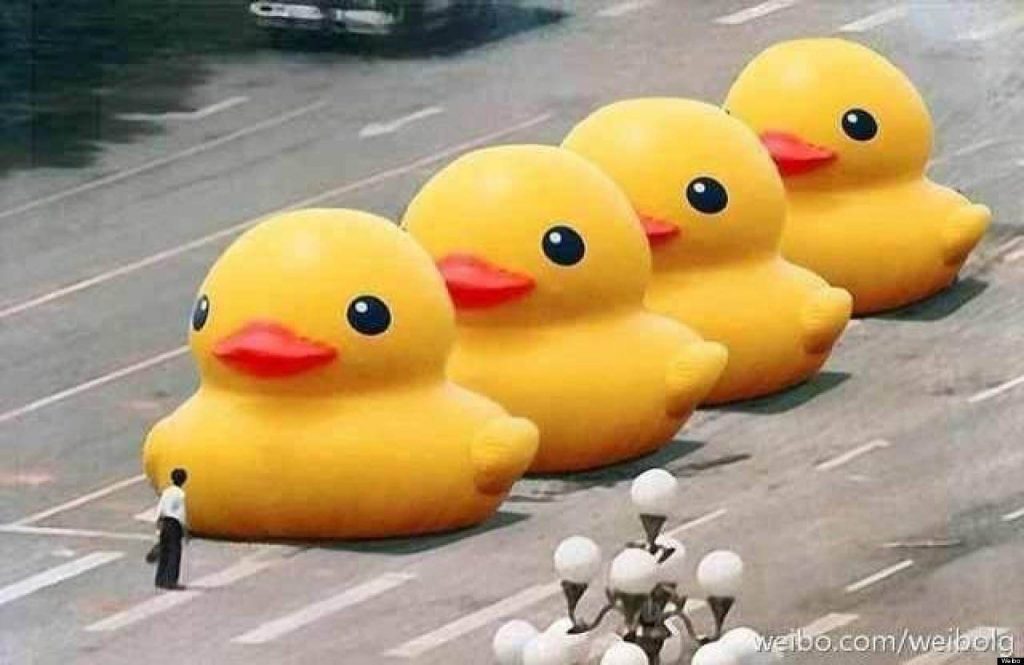
Of course, this week was also the anniversary of the Tiananmen Square Massacre. (Or, as I’ve been thinking of it, while reading over lists of hundreds of words that will prompt Chinese censors to delete a social media post, Censorship Awareness Day.)
Last year, two days before the 25th anniversary of the massacre, China commemorated the event by blocking Google. This year it didn’t have to, because all Google services are still blocked here in mainland China. So are YouTube, Facebook, Twitter, Wordpress, this blog about life in China, and a good deal of the outside world’s journalism. (The New York Times and BBC are blocked, but a lot of sites featuring snippets of their content, such as The Daily Beast and The Week, are still accessible. This is why all expats and many locals here use a VPN.)
This week, in the college English classes I teach, I gave a lecture about Western taboos.
In my class with the most open-minded students, I segued from offending a conversation partner to offending the government. On Thursday, June 4, I asked my students what had happened on that date in China in 1989. At first none of them seemed to have any idea. Then one student said he knew. His father had been on his way to the protests in Beijing, but had been called back to work – a call that, as he told the class, maybe saved his father’s life.
Many students were still confused and one asked me outright if I knew the story of the massacre.
I answered that yes, I did. To my surprise, they wanted me to tell them (which I hadn’t planned to do). But I also didn’t feel it was right to say, “no, no, you’ll have to go read about it online.” If they don’t have access to a good VPN, they can’t go read about it online. And it’s certainly not in university library books.
So I gently outlined the events: Students demanding democratic reforms and an end to corruption. Tank Man. A death civilian toll estimated in the thousands.
They asked if all foreigners knew about this. Yes, I told them yes, and it’s in school textbooks in the U.S. This detail shocked them more than any other. The hardest part was seeing them look defeated and, most strikingly, embarrassed by not knowing their country’s history.
That was one of the days when I felt like my job was actually important. I was actually doing something for these students that no one else had, instead of just correcting the same grammar mistakes week after week.
Teaching “Under the Dome“
Another time like that, and one of my favorite weeks teaching here, was when I showed a clip from a documentary called Under The Dome and led a discussion – with the classroom doors closed – about pollution, corruption, and censorship.
Under the Dome is a film by independent Chinese journalist Chai Jing. Back when people were talking about it, it was likened to a Chinese version of An Inconvenient Truth – unprecedented, controversial, and game-changing.
The film was released for free online on February 28 – including on the website of the communist party’s newspaper. It was praised by China’s environmental minister. Then it was banned by the party one week later, after about 200 million views in China.
Very few of those viewers were my students in the huge, but rather provincial city of Jinan. In most of my classes, two or three students had heard of the film. And maybe only one had watched a portion of it. I showed the first few minutes of it. When I turned the lights back on, half of my students had tears in their eyes in each of my six classes. Here’s what they saw:

My students’ reactions really surprised me, even though they were logical.
We live in the seventh smoggiest city in all of China. And a lot of students, at least here in the relative sticks, aren’t entirely aware that their government censors the Internet.
But some of their comments in our discussions floored me. First among them was the student who reminded me why I had chosen to show the film in the first place: “Ignoring the problem is the biggest problem.”
Here are some other comments from my students while discussing Under the Dome:
“I think,” one student told the class, “the government thinks the more truth the people know, the more troubles the government will suffer.”
“I think she’s the only journalist to tell the truth,” one student said of Chai Jing, the reporter who made the film.
“Everyone in China is ‘under the dome,’” said another student. “That’s a Chinese fact.”
“We ordinary people want to change,” another commented, “but we don’t have the power.”
One of the maxims that stuck in my head from journalism school is “sunshine is the best disinfectant.”
The rise and fall of Under The Dome is just one more anecdote on how little sunshine breaks through here, in the literal or figurative sense.
Still, one of my friends told me Under The Dome had been playing on loop at his gym weeks after it was banned by the communist party’s censors. A few students reported they could still find the documentary online, even without a VPN. A couple even enthusiastically asked if I could give them a copy of the entire film.
Their interest and perceptiveness impressed me. Mostly because, in my year two semesters of teaching university English here in China, I’ve realized college students here seem much less worldly than in the West.
And that is certainly by design. China’s education minister recently said this:
“We must, by no means, allow into our classrooms material that propagates Western values.”
And yet, here I am.
I can’t fault the Chinese for wanting self-determination; after all, the U.S. wouldn’t encourage material that propagates supposedly communist Chinese values in schools. But we would never hear a high-level official being so blunt, and frankly so honest, about it without serious backlash. The problem is, this isn’t just about individual or national self-determination; it’s about citizens not seeing any other views besides the one handed down from the elite group that is the Chinese Communist Party.
The Scary Side of Censorship
Since January, the government has been cracking down on VPNs (a kind of software for accessing blocked websites, as I explain in this post, as if the user were outside of China). They’ve also increased censorship in general since last year’s Tiananmen anniversary. (Many commercial VPNs don’t work as well as they used to, but many underground programs are still running well.)
For me, this has been one of the most frustrating things about living in China. Not just because it’s inconvenient to have to use slow, unreliable VPNs to get to the real Internet – although that is a factor that gets exhausting. But also because not having the freedoms of expression or information is philosophically terrifying.
And it’s occasionally terrifying in a less philosophical, more literal sense, such as when I read about Chinese journalists asking good questions and then disappearing. Or perhaps instead of disappearing, being “invited” for “tea” with the “police.”
Knowing such power is out there, that it’s real and it’s the current regime of the country where I live (for reasons that sometimes escape me), is scary. It’s infuriating and sometimes humbling, but I still can’t bring myself to shut up about it.
Right now, it seems nothing is too petty for the censors here to block. But I’m convinced they won’t be able to keep it up for very long.
Based on what I see every time I leave my apartment, roughly everyone in China is online 100% of the time. As more people discover how easy it is (even after the crack-down) to download a VPN and make a Facebook account or watch American TV shows on YouTube, the government’s façade of “Internet sovereignty,” (the term they use to justify censorship) will crack.
It’s unimaginable to me that such devout Internet lovers as the Chinese of my generation would continue to accept the imitation Internet they’re being fed. The only questions are how long it will be before Beijing admits it can’t control information in the Information Age, and how much drama we will all have to endure before that happens.
UPDATE:
I published this blog post just a few weeks before finishing my teaching job and leaving China. (I should have waited to publish it after leaving the country; I’m not sure why I didn’t.)
A few days later, I got a call from a university leader about some random administrative topic. I couldn’t quite figure out why she was calling me about it, until the subject changed. She told me, “I have this article, about ‘Teaching Under the Dome,’ printed out…” My blood went a little cold. I forgot some of the details of what she said, as I was waiting for the hammer to drop. But I remember this: “You cannot write this kind of thing, Ketti. You have your rights, but not in China.”


穹顶之下,现在看来,真是个笑话
What do you mean by that? Because it didn’t stop pollution?
不是,而是当时它要阻挡中国发展。当时雾霾的确很严重,政府也注意到了,解决问题需要时间,但这个纪录片责备政府应该立即履行西方制定的规则,从而限制中国的工业化水平,可中国要想发展怎么能不进行工业化,要发展工业化又怎么能没有雾霾,雾霾是发展工业的一个过程,但不能因为有雾霾就放弃了工业制造业,不然现在拿什么跟美国谈判。重要的应该是如何利用技术缓解雾霾,所以后来中国大力发展清洁能源和技术,现在国家发展电动车技术就是一个例子,你现在去中国会发现雾霾较十年前少多了吧,虽然有些城市依然有,但国家依然在想办法解决它。最后说一下奥巴马当时的气候政治。发达国家由于率先进入工业社会,当下发达国家的碳排放总量和人均排放都远高于发展中国家。因此,通过限定碳排放总量,制定‘减排’目标等方式,发达国家可以限制发展中国家工业化水平,让发展中国家始终无法跻身于发达国家行列,通过主导国际规则制定,巩固自身的长期优势经济地位。顺便说一下,现在你们美国自己都退出巴黎协定了。(抱歉,这个网页我只有回复消息后才能看到之前发的消息,所以误会了,以为是你删了我的评论)
讲言论自由的美国人怎么还删评论?lol
Ah, the oldest argument in development: “Rich countries got rich by polluting, exploiting people, and over-extracting resources, so everyone else should be allowed to do the same.” Allowed sure, but should they? None of those things were good policy when the West did them, and none of them are good policy now for any other country. It’s a short-sighted way of thinking of development.
Obviously now China is the world’s biggest investor in renewable energy, the EV market is very developed in China, I’m aware of all these things, and am very happy to see them. But why argue that anyone should be allowed to pursue technologies that we know are toxic to everyone on this planet?
Finally, yes, my government did withdraw from the Paris Agreement. That was not my choice or my vote, and many millions of Americans have been protesting that and other short-sighted decisions this weekend, and since the new administration took office.
By the way, I never deleted your comments, I just get a lot of spam comments, so I have to approve comments manually after seeing that they’re real.
Thanks for the conversation.
– Ketti