True Americana: the Unvarnished Story of Franklin, a Unique Tennessee Weekend Getaway
Officially, these are my recommendations for a weekend getaway in Franklin, Tennessee, a small city that feels more like a country escape, if you visit the right parts.
Unofficially, this is a story of an American town that’s both modern and historic, charming and jarring, and surprisingly worth a visit. Especially if you’re looking for a Tennessee weekend getaway with Southern food, live music, and deep history, but without the Nashville crowds.
DISCLOSURE: This trip was sponsored by Visit Franklin. As usual, my opinions are my own.
I definitely didn’t discover Franklin, and I don’t feel like I’m done exploring it, but it certainly captured a bit of my heart during my summer visit.
Let me set the scene, starting at midnight on my last night in town:
I’m eating an oatmeal raisin cookie while peeing. No, I’m not drunk in an alley.
But I’m definitely a little tipsy, after walking home four quiet, manicured blocks to my cozy room in the only downtown hotel, a locally-owned Hilton, where a cookie waited on my pillow when I arrived at midnight.
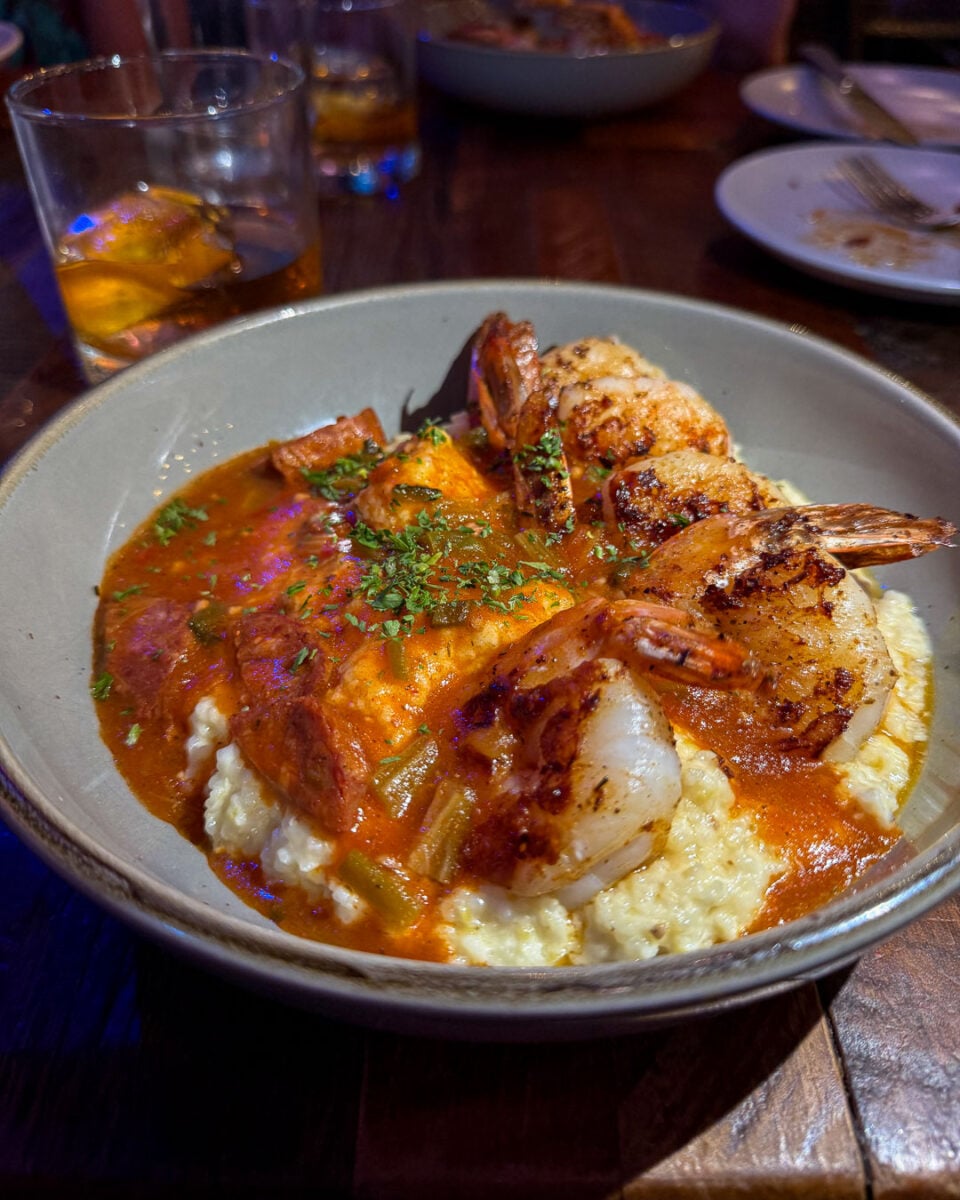
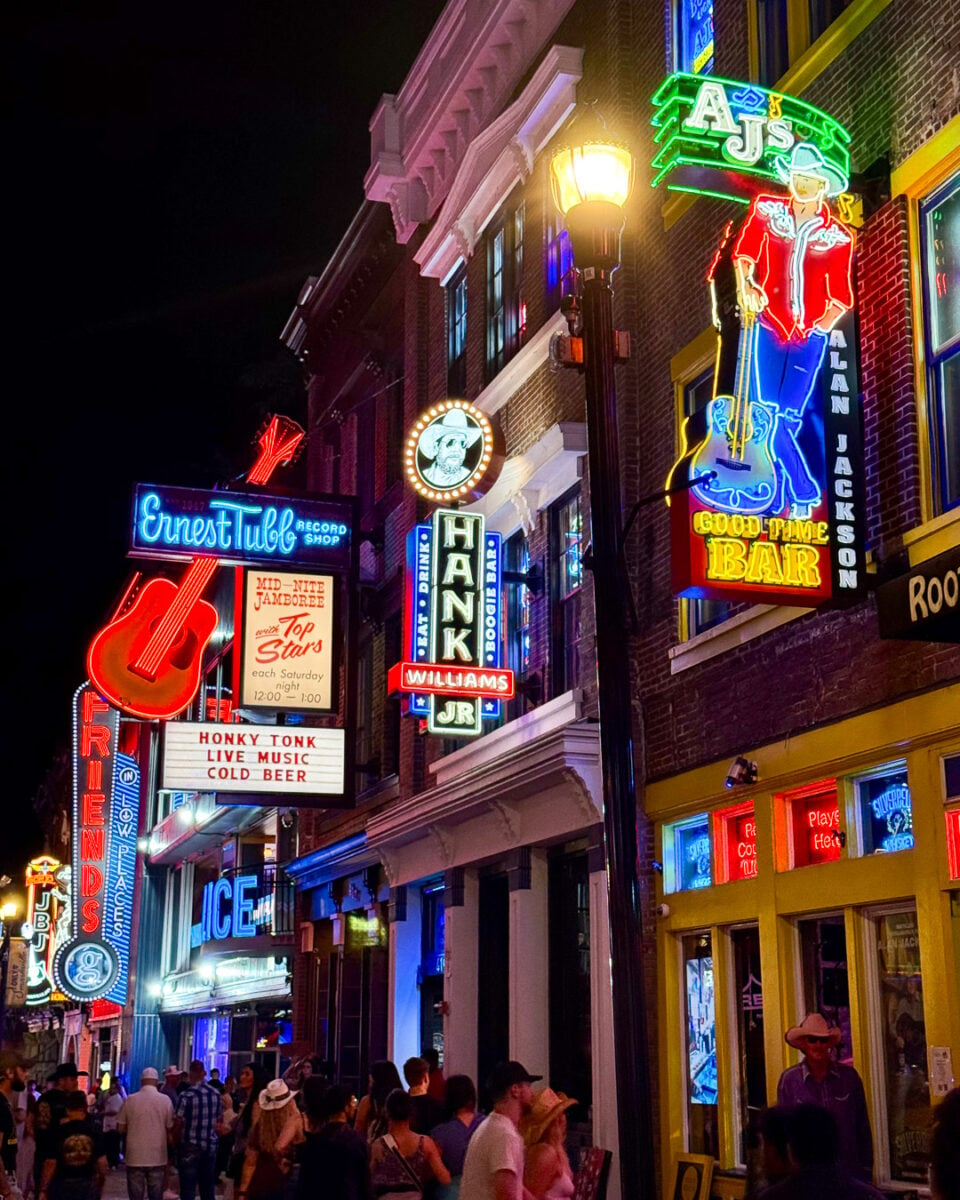
After a dinner of shrimp and grits, while listening to an award-winning local singer-songwriter belt out impressive Dolly Parton covers, then a stop at a speakeasy, I ended the evening on the “legendary” front porch of a small dive bar, with local and out-of-town talents picking guitars in the warm air of a perfect May evening after a stormy day.
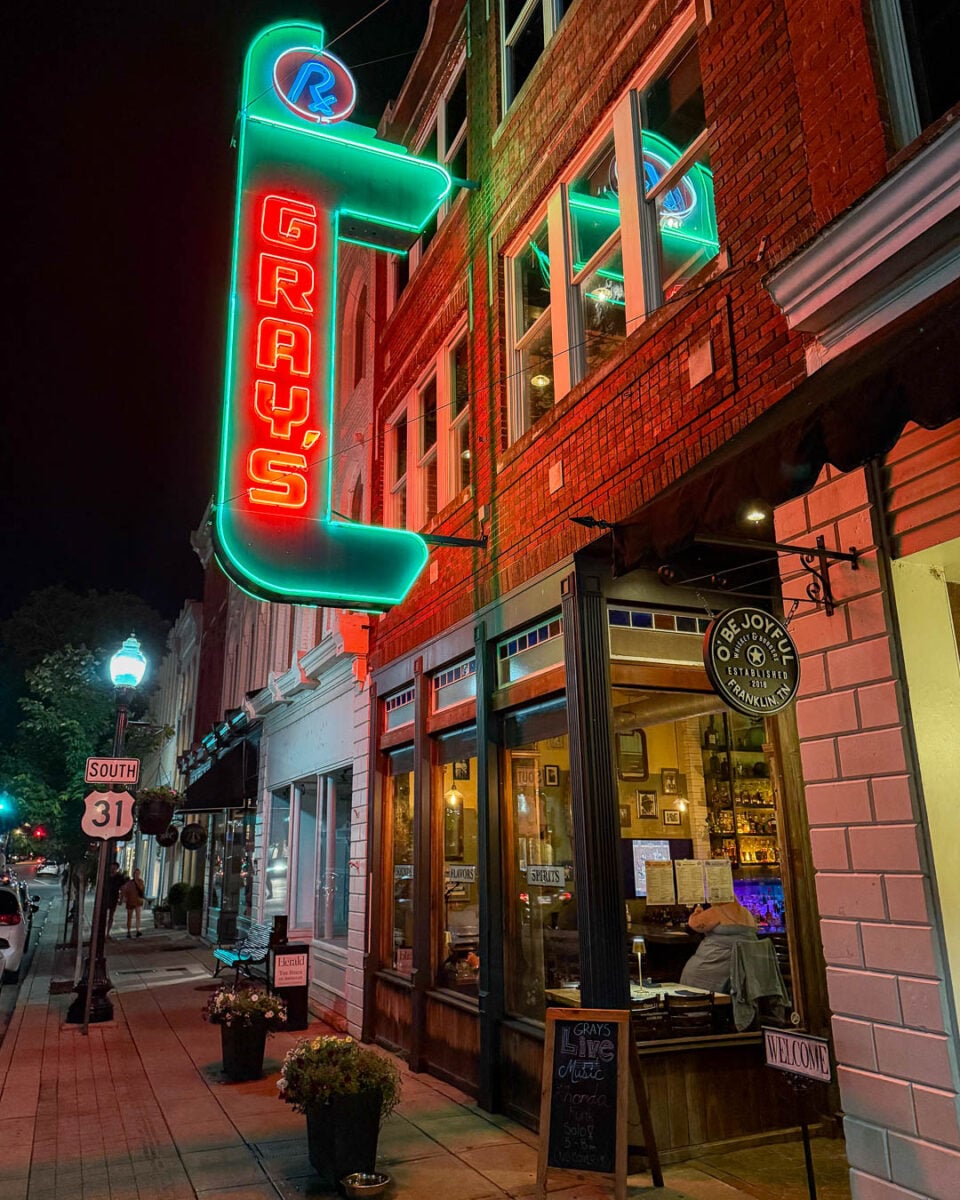
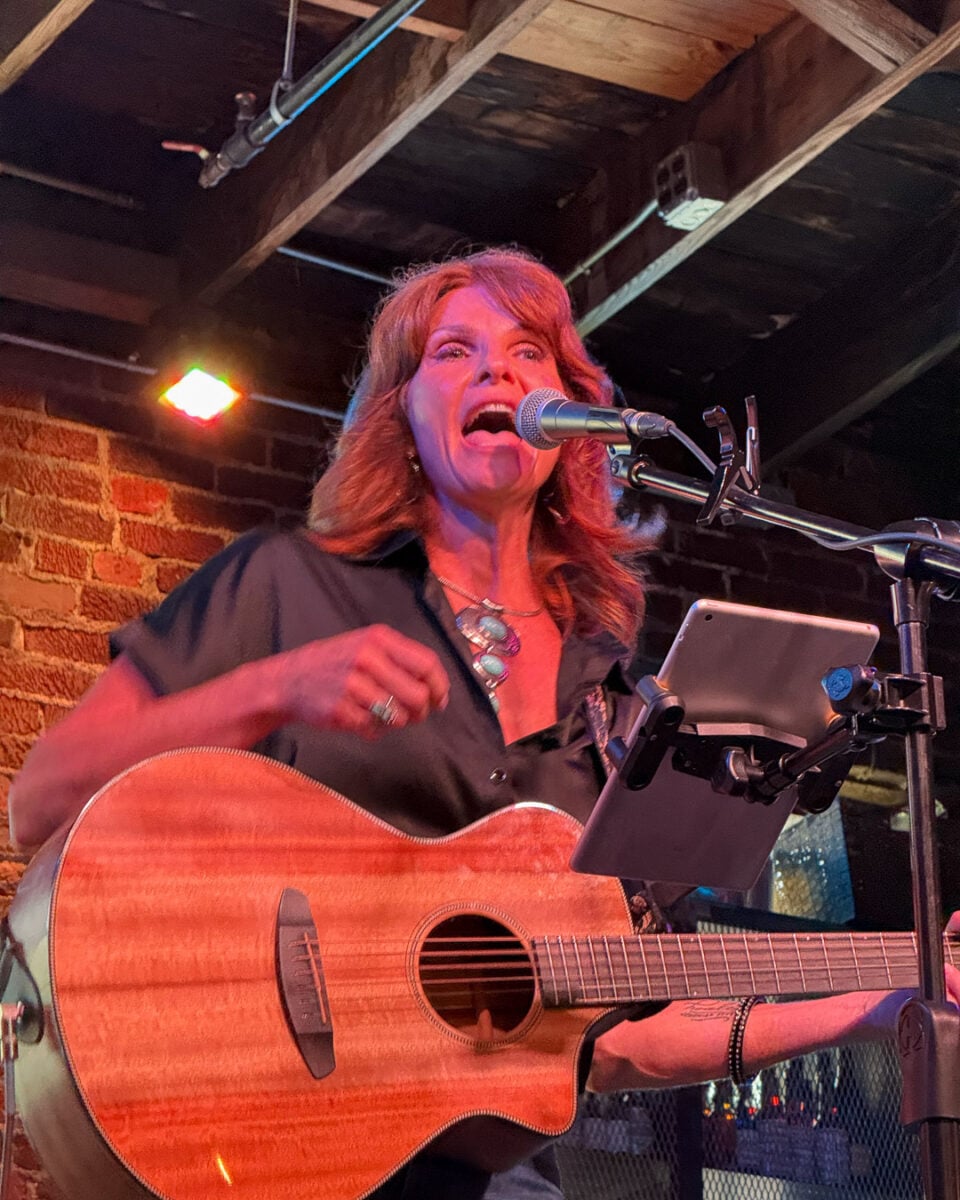
Although on second thought, calling our final stop a “dive bar” may be a little too grand. It felt more like a college house party with a bartender. The walls were covered in ironic music and pop-culture references, but the level of musical talent was decidedly higher than where I went to college.
No offense, Montana, but this is the Americana Music Triangle, after all.
The town’s PR director told me that Grammy winners play the park benches here, and it sounded like a line too perfect to be true, no matter how many examples I heard.
This is the town where Taylor Swift recorded her first album. Miley Cyrus was born here, Ke$ha grew up here, and Justin Timberlake spends his downtime nearby.
Paramore was discovered on the very porch where we drank local beers at midnight, and Kenny Chesney’s famous song, The Boys of Fall, was written just a few doors down the street.
So you never know who’s going to show up on that porch. It’s the after-show cool-down spot for big names, just as much as it’s the warm-up spot where locals pick up an instrument to noodle around.
But make no mistake, this is no Southern country town on a dirt road. Not in this century, at least.
A few decades ago, the locals tell me, Franklin wasn’t even worth a road trip stop. Now, it’s one of the richest towns in one of the richest counties not just in Tennessee, but in the entire US of A. International corporate executives share a zip code with regular Tennessee families.
But despite the growth, Franklin remains both interesting and, as tour guides kept pointing out, “complicated.”
Earlier that day, I went on a tour where the guide raised my eyebrows more than once with comments on the Civil War that haven’t aged well, even 160 years later, to anyone unindoctrinated to the culture of the “deep-fried South.” (To borrow my local cousin’s favorite term.)
“It’s complicated,” is a Southern euphemism perhaps more overused than “bless his heart,” at least when talking about Civil War history and the institution of slavery.
So as an outsider, it would be easy to think the South loves a euphemism even more than a lost cause. But the causes that have been championed in Franklin lately are an inspiration: From historical preservation, to cutting-edge sustainability, to telling a more inclusive story of local history. Let’s start with that one.
Franklin’s “Fuller Story,” Civil War history & controversy
When you visit downtown Franklin, you can’t miss “Chip,” the imposing statue of a generic, unnamed Confederate soldier that has held a place of honor in the middle of Main Street since 1899, a century after the town was founded. Fast forward another century, and thousands of locals have petitioned for its removal.
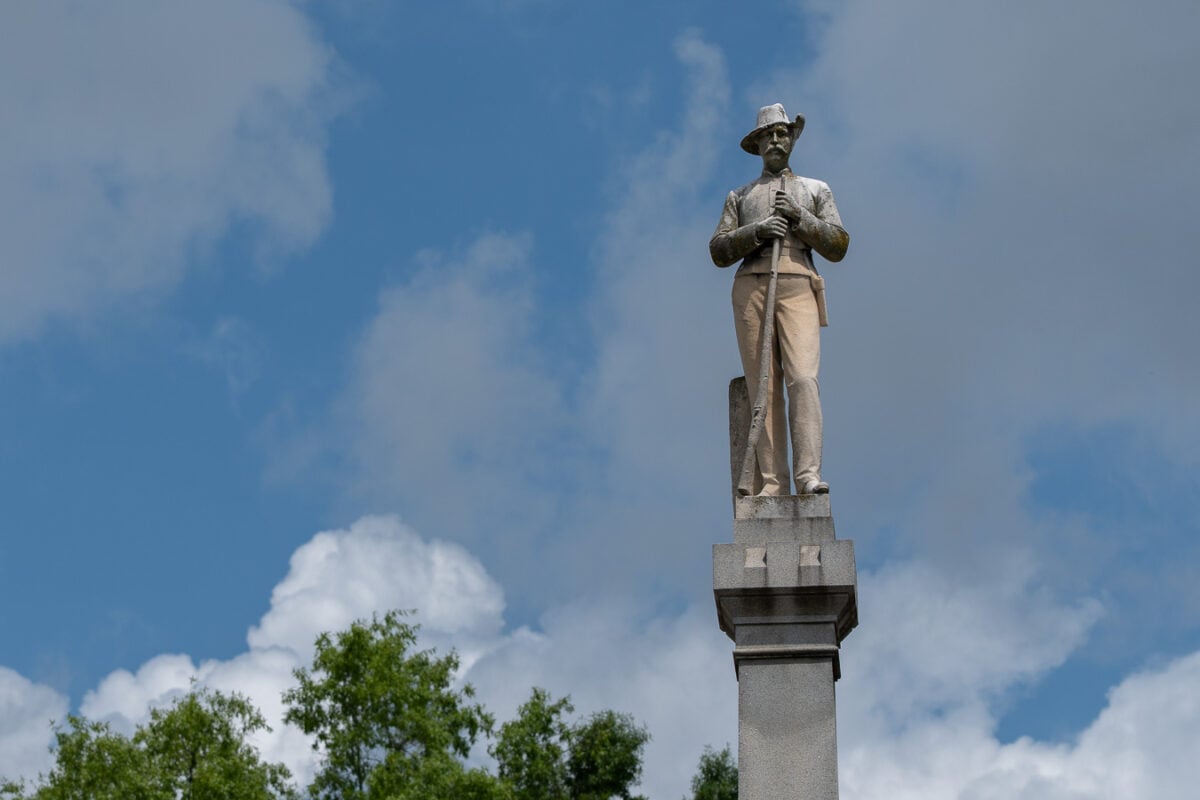
So since 2019, Franklin has been working to tell a “fuller story” of the Civil War and the heartbreakingly racist history of this country, including Tennessee’s role.
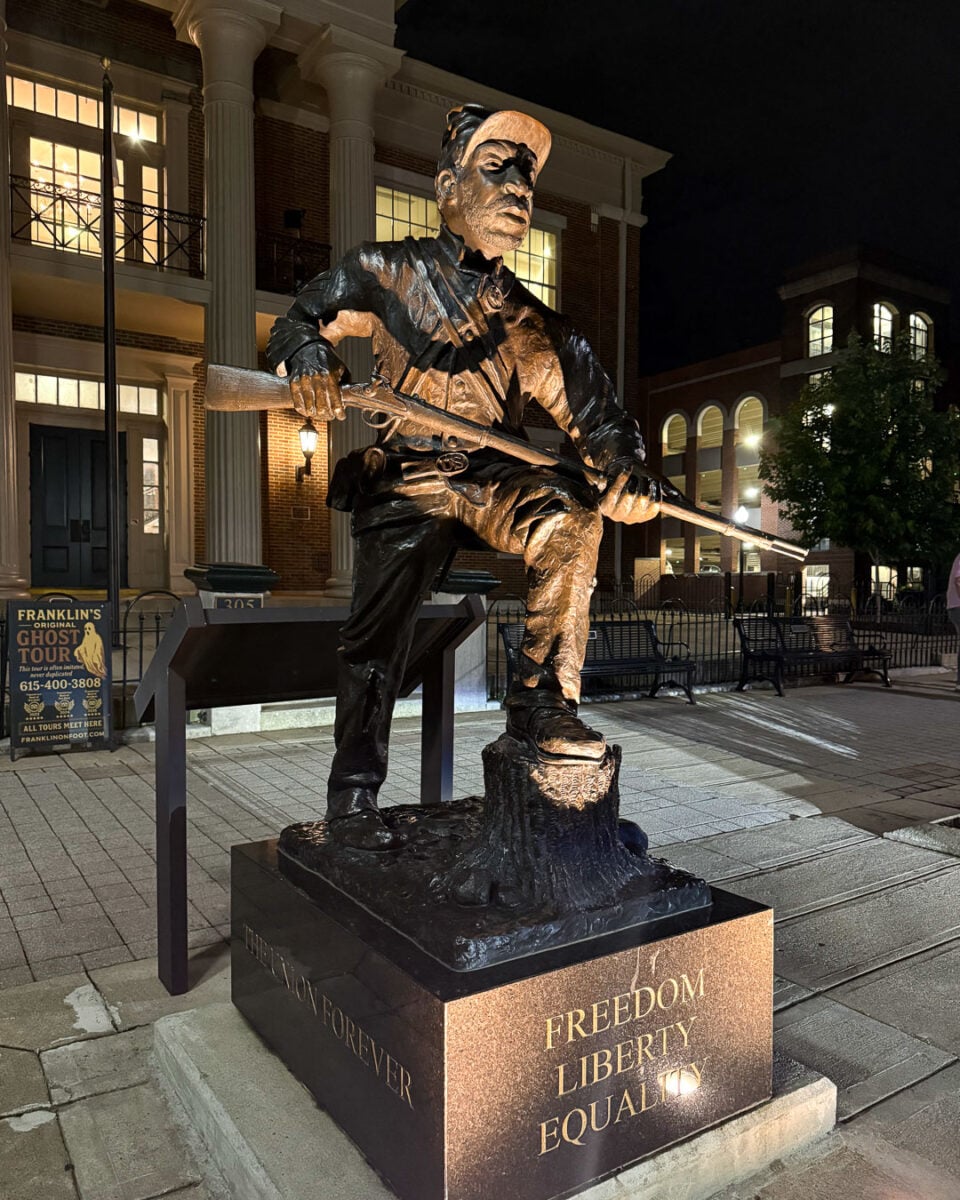
Right across from Chip now stands the March to Freedom Statue. It was the first monument in the entire United States to honor Black soldiers of the Civil War in a public square. The recent date made it surprising, but it’s certainly something for Franklin to be proud of.
The right and wrong ways to visit a plantation
Still, on the town’s hop-on, hop-off trolley tour, the guide pointed to the cemetery of Carnton Plantation and simply said, “The slaves are buried in there together with the family, because they were family.”
It’s a twisted idea that historians tell us was common in the 1800s, but hearing it repeated so casually today felt like a shock.
A few feet away is a private cemetery created after the Battle of Franklin, which was one of the Civil War’s bloodiest. The cemetery still flies the Confederate Battle Flag. For a place that’s changed so much in recent years, the town has plenty of reminders that this is still very much the South.
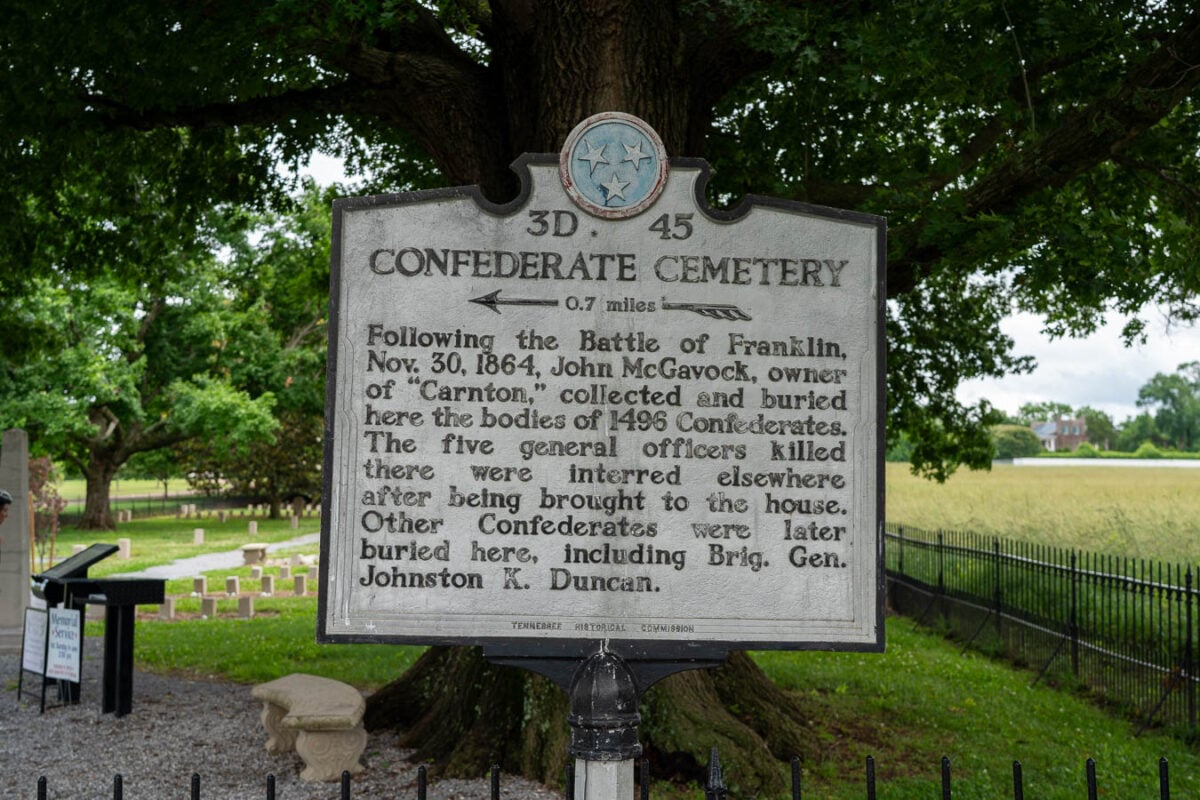
Progressive changes have also been made at Carnton Plantation in recent years to respect the site’s grim history (no more plantation weddings) and portray a fuller story, including that of people who were enslaved there. (And who, in my personal opinion, I doubt felt themselves to be part of their enslaver’s family.)
To get that fuller story, I’d recommend the Slavery and the Enslaved tour at Carnton. This is the kind of place that simply shouldn’t be wrapped up with a line or two on a wide-ranging town tour.
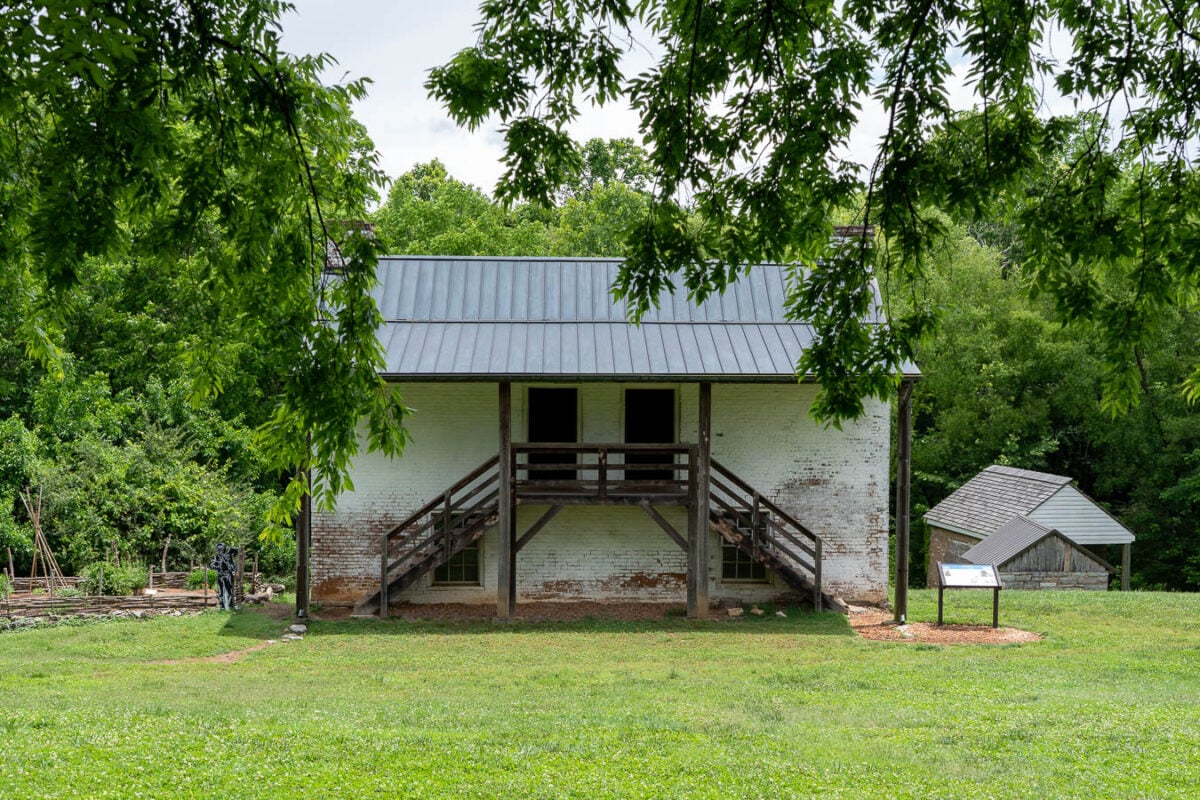
How to visit Carnton Plantation (no car needed)
You can easily get to Carnton from downtown Franklin (2 miles away) on a rented e-bike, or on the Franklin Hop Trolley Tour. The trolley is an easy way to see the main sites, with a bit of live explanation, and you can hop off at the plantation for a full tour.
Planning Tip: Like many things downtown, Franklin’s Trolley Tour currently only runs Wednesday through Saturday, 10am to 5pm. You can buy your tickets online or at the Franklin Visitor’s Center, a block from the Chip statue, where the tour starts every hour on the hour.
Or rent an e-bike from the locally-owned shop, which also offers guided tours. (And the shop expands your car-free transit options to include Tuesday.)
Franklin & the Americana Music Triangle
As a traveler whose favorite topic is certainly not war history, I almost wrote Franklin off. But I’m convinced that the town’s famous battleground is the least interesting thing about this part of Tennessee.
Nashville and Franklin are at the northern corner of a sliver of the Southeast known to be the cradle of several American musical genres. From the Mississippi blues to bluegrass, Southern Gospel to soul, country to Cajun, this area has more than its fair share of musical exports.
But it didn’t have an official name until a decade ago, when a wealthy local conservationist helped to give it one: The Americana Music Triangle.
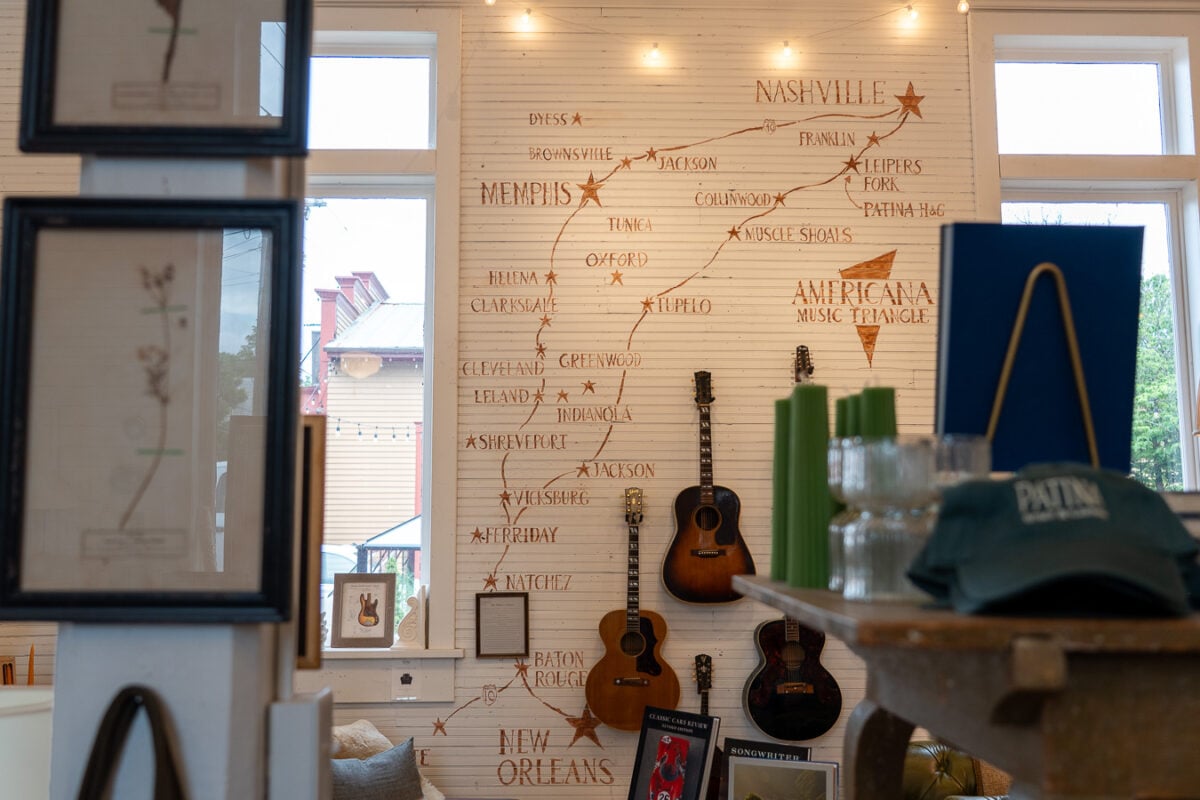
The point of the project was always to protect this unique, historic region from both neglect and overdevelopment, two sides of the same coin in any rural area, especially in the age of the super highway.
The eastern side of the triangle is bordered by the Natchez Trace Parkway, a 444-mile scenic route from Nashville, Tennessee, to Natchez, Mississippi. It used to be a main thoroughfare, but when the interstate moved in, the Parkway lost lots of traffic, and the historic towns lost jobs and population.
Now, the parkway is more like a mini Route 66 for the South. It’s an ideal place for a road trip, with bucolic views and no semi-truck traffic, but the local communities have had to reinvent themselves to stay relevant.
Leiper’s Fork: a village reinvented
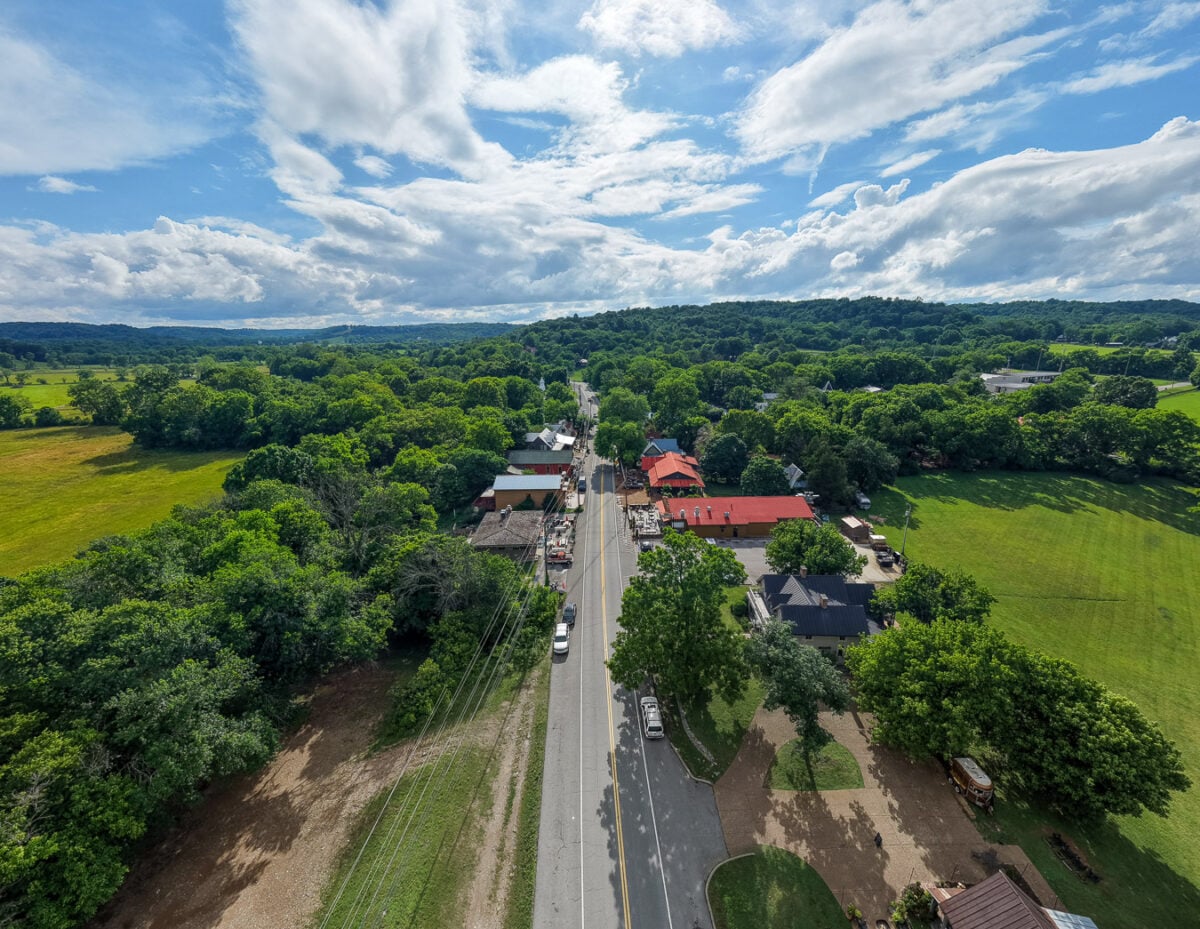
Leiper’s Fork was one of those communities on the Parkway that was never big, but risked becoming nothing but abandoned buildings before the Americana Music Triangle reminded people it was worth preserving.
Now, this so-called “wide spot in the road” is famous for its music and art scenes that frankly have no place being in a village of 625 people. They’re world-class.

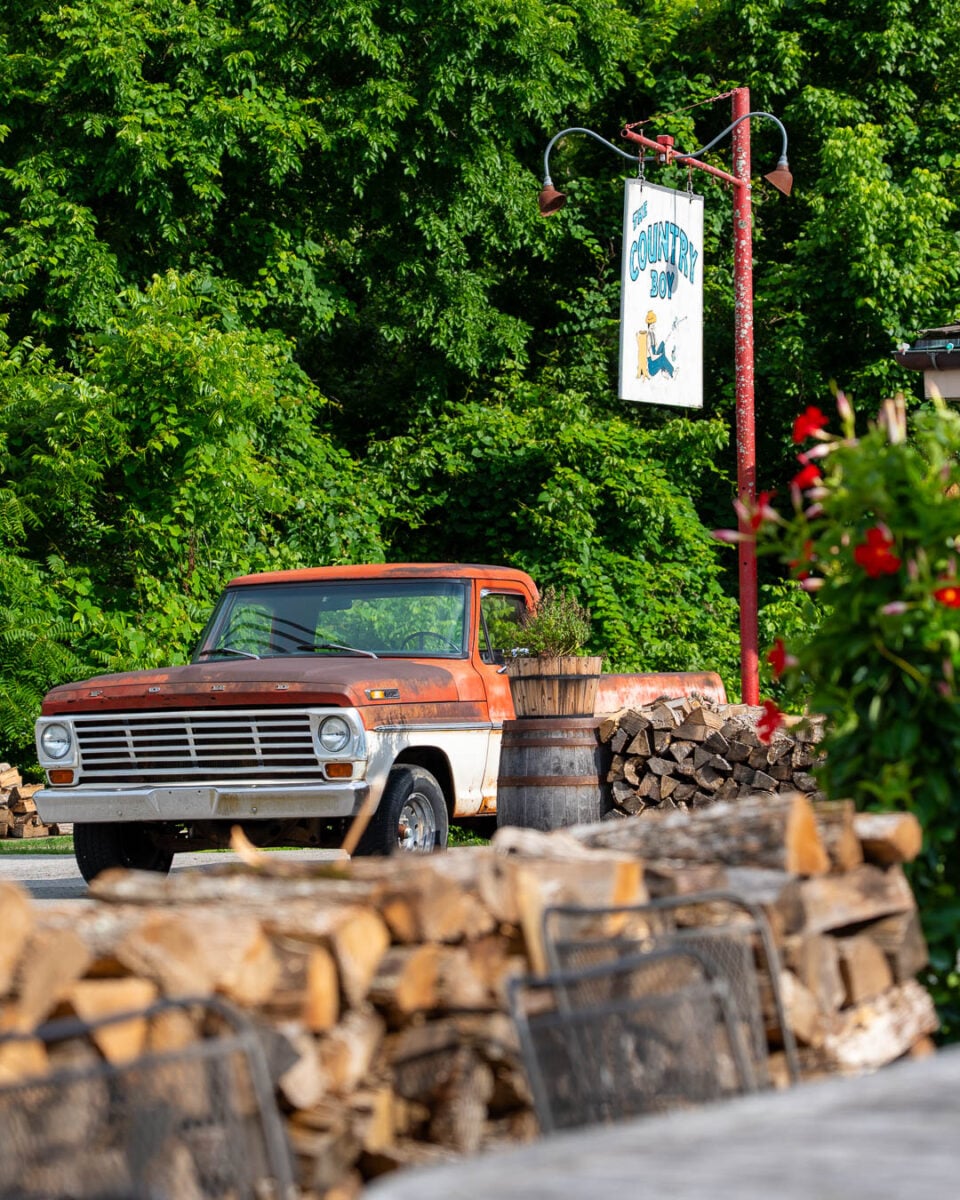
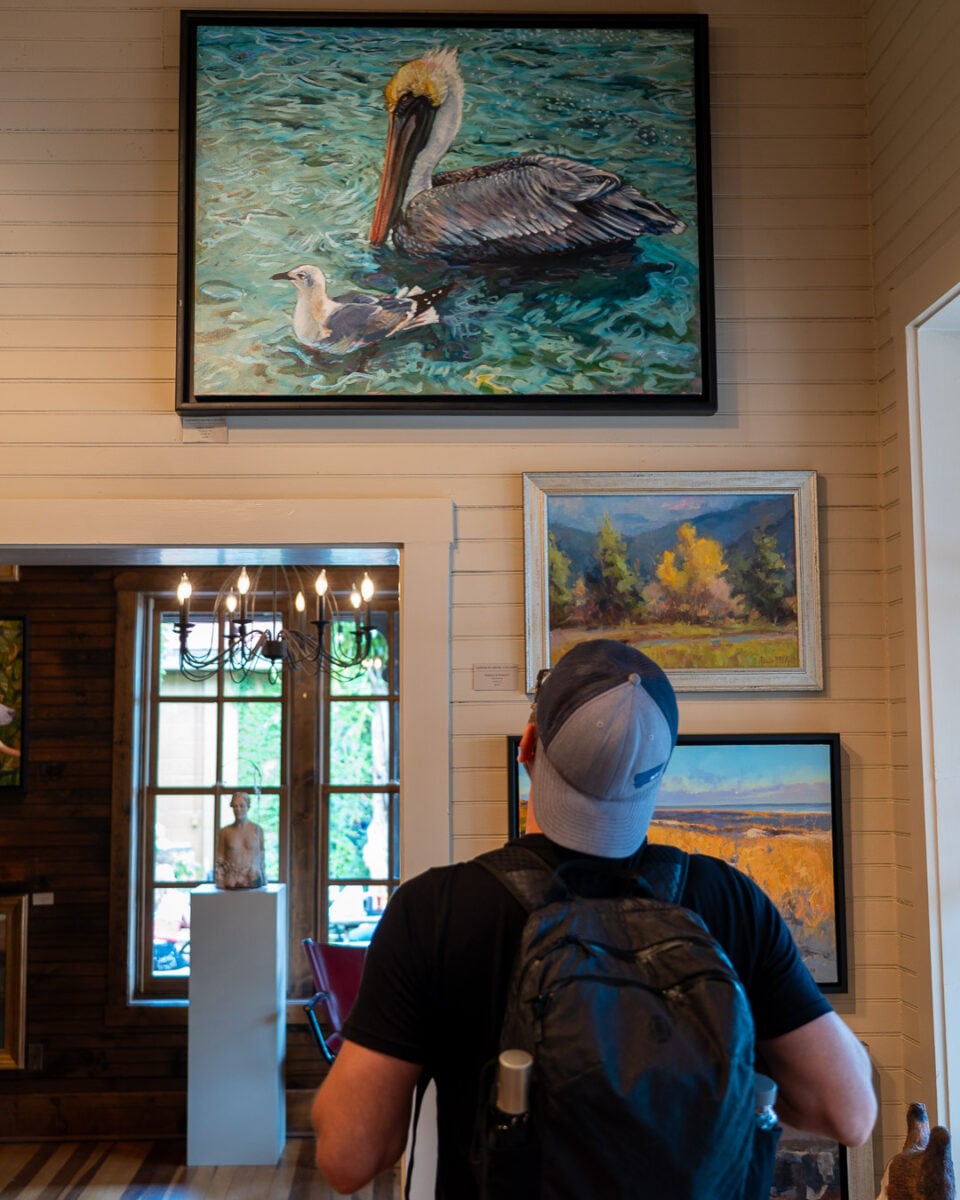
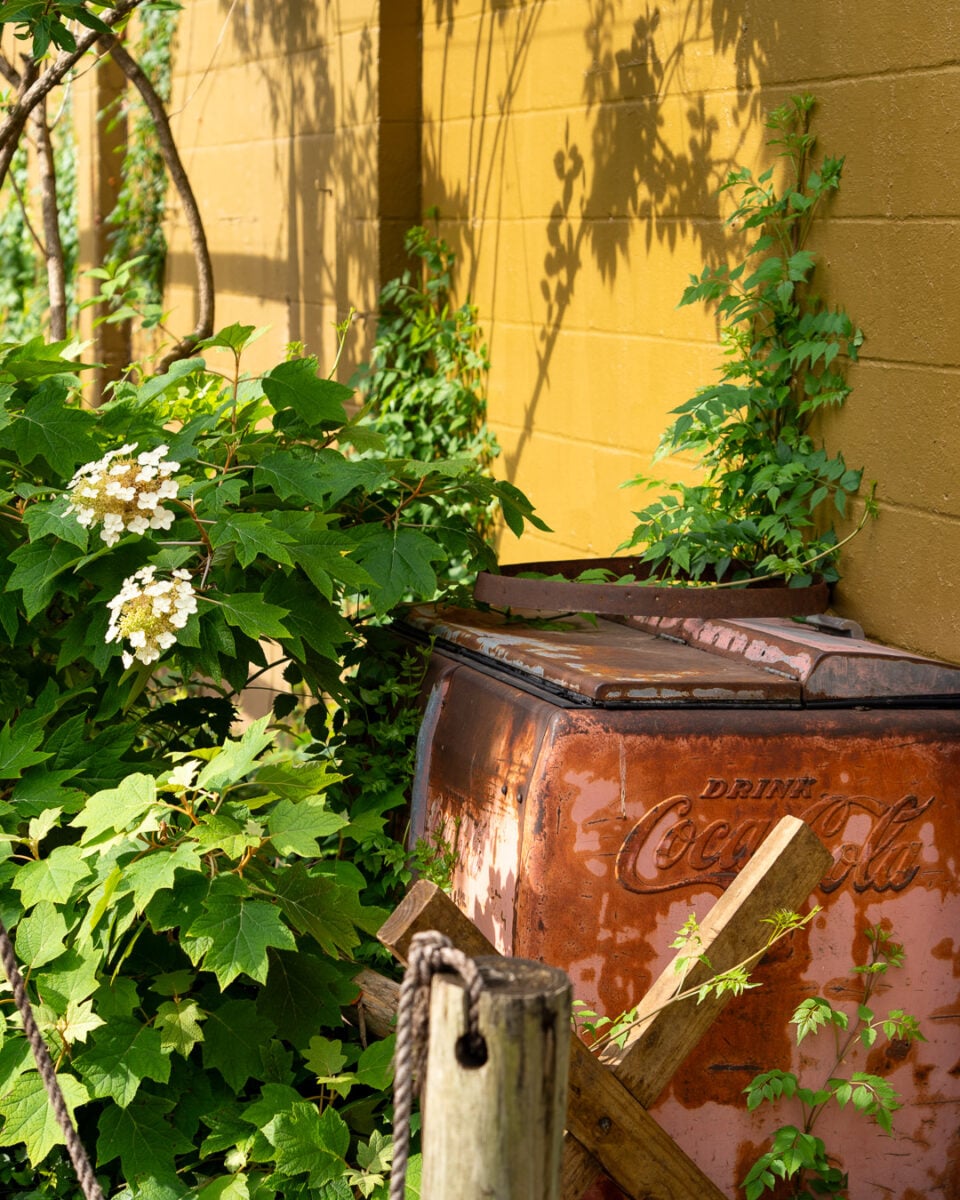
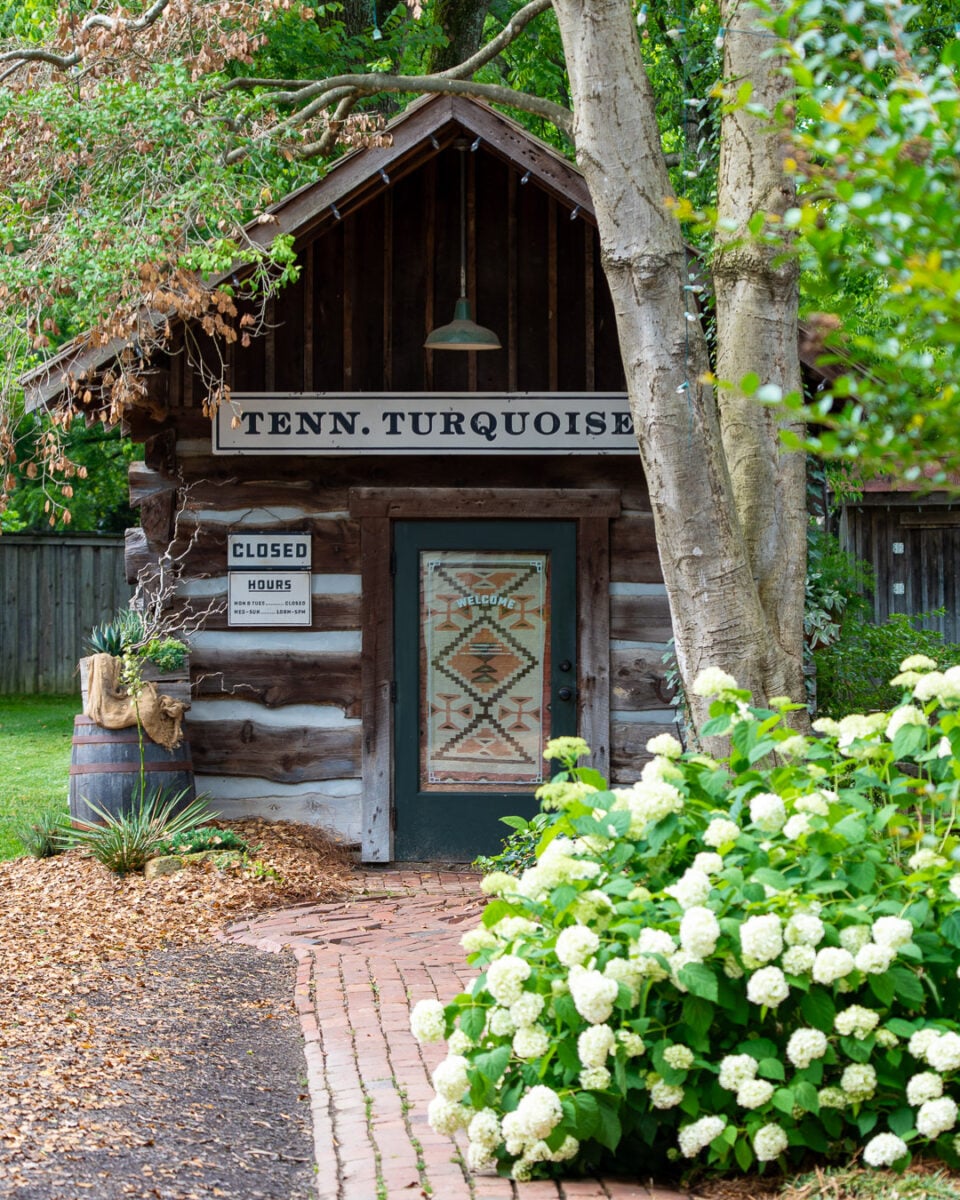
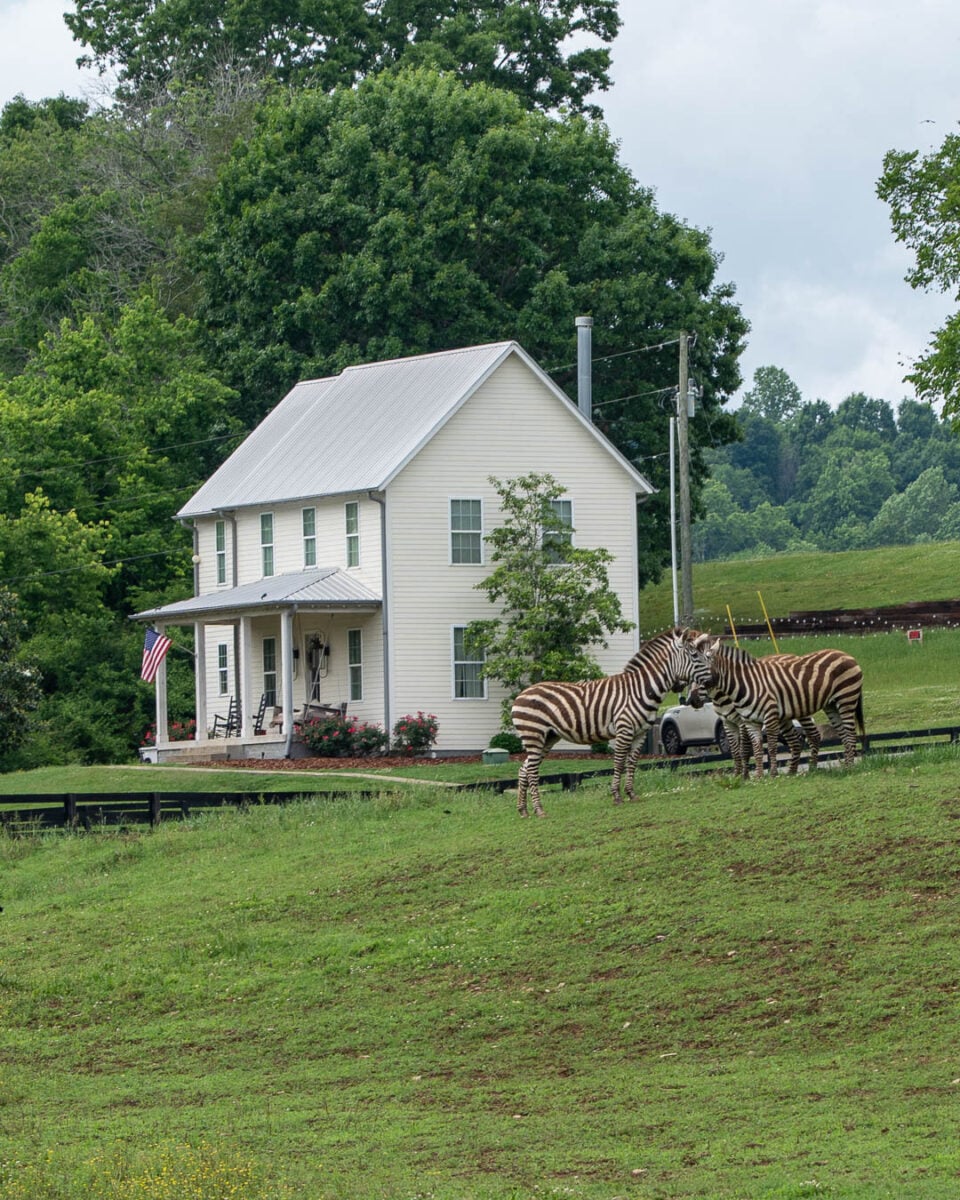
The rolling, green hills around Leiper’s Fork are home to humble farms, as well as very eccentric farms featuring unexplained zebras, and no shortage of not-so-humble mansions.
Where’s JT’s house?
I had never met a PR executive who refused to spill celebrity gossip until I met Matt, the public relations director of Visit Franklin. He took us on a drive through the hills, and only mentioned in passing that “we just drove by the homes of some people you hear on the radio.”
One of those homes belongs to Justin Timberlake and, according to Matt:
“If you ask a local where Justin Timberlake’s house is, anyone will give you directions… and you’ll end up at a gas station down a dirt road in the middle of nowhere.”
Matt Maxey, Visit Franklin
Quite a contrast to glittering Nashville, with its bus tours of celebrity homes.
And I suppose that’s part of the spirit that makes the Franklin area different. Despite the recent growth, increased wealth, and small doses of fame, they don’t do celebrity gossip, and the paparazzi are not welcome. A-listers still eat dinner at the same local joints as everyone else, and play the same small stages as young musicians looking for their first big breaks.
I can’t think of anything more Americana than that.
Not to miss in Leiper’s Fork
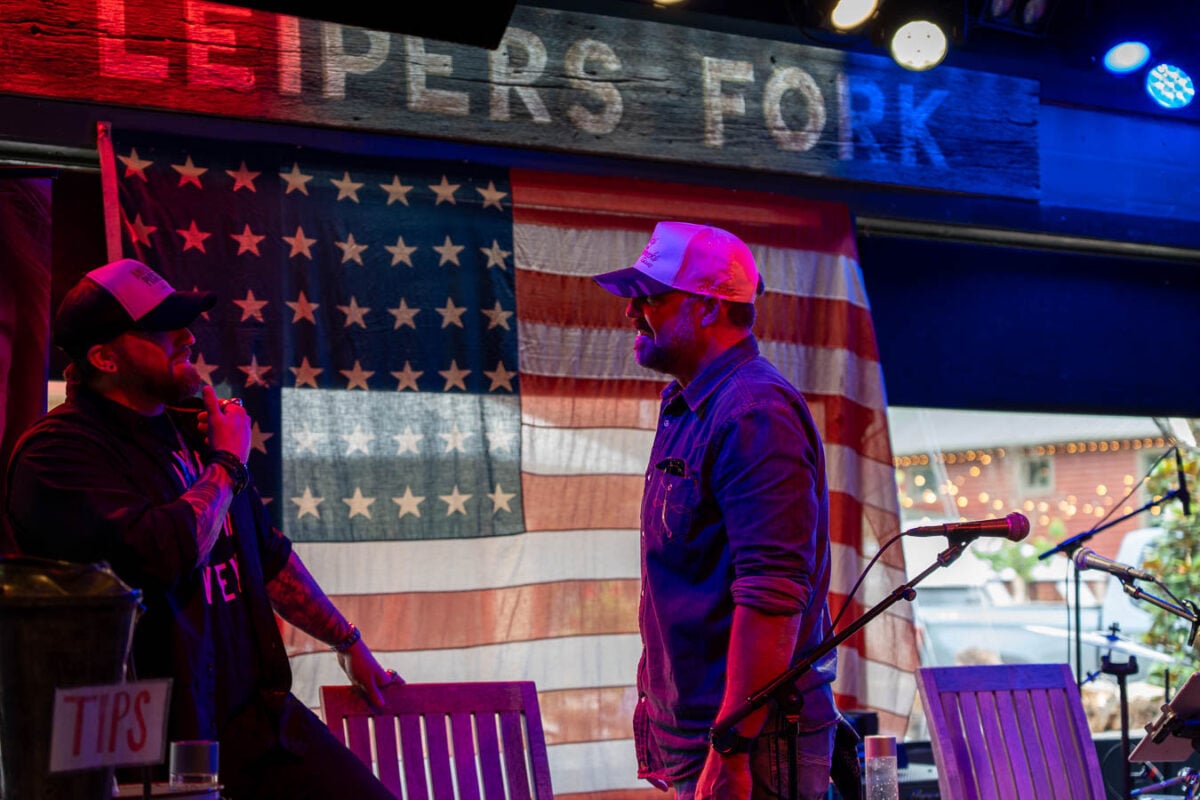
One of those local joints on my list for my next trip to Middle Tennessee is the Fox & Locke. It’s been an institution in Leiper’s Fork since the 1940s, when it started as a grocery store. Now, it’s a Tennessee version of a New York City comedy club: The open-mic night is where new talent goes to be discovered, and famous pros drop in (never announced) to try out new stuff.
This is one $7 ticket you’d better book in advance.
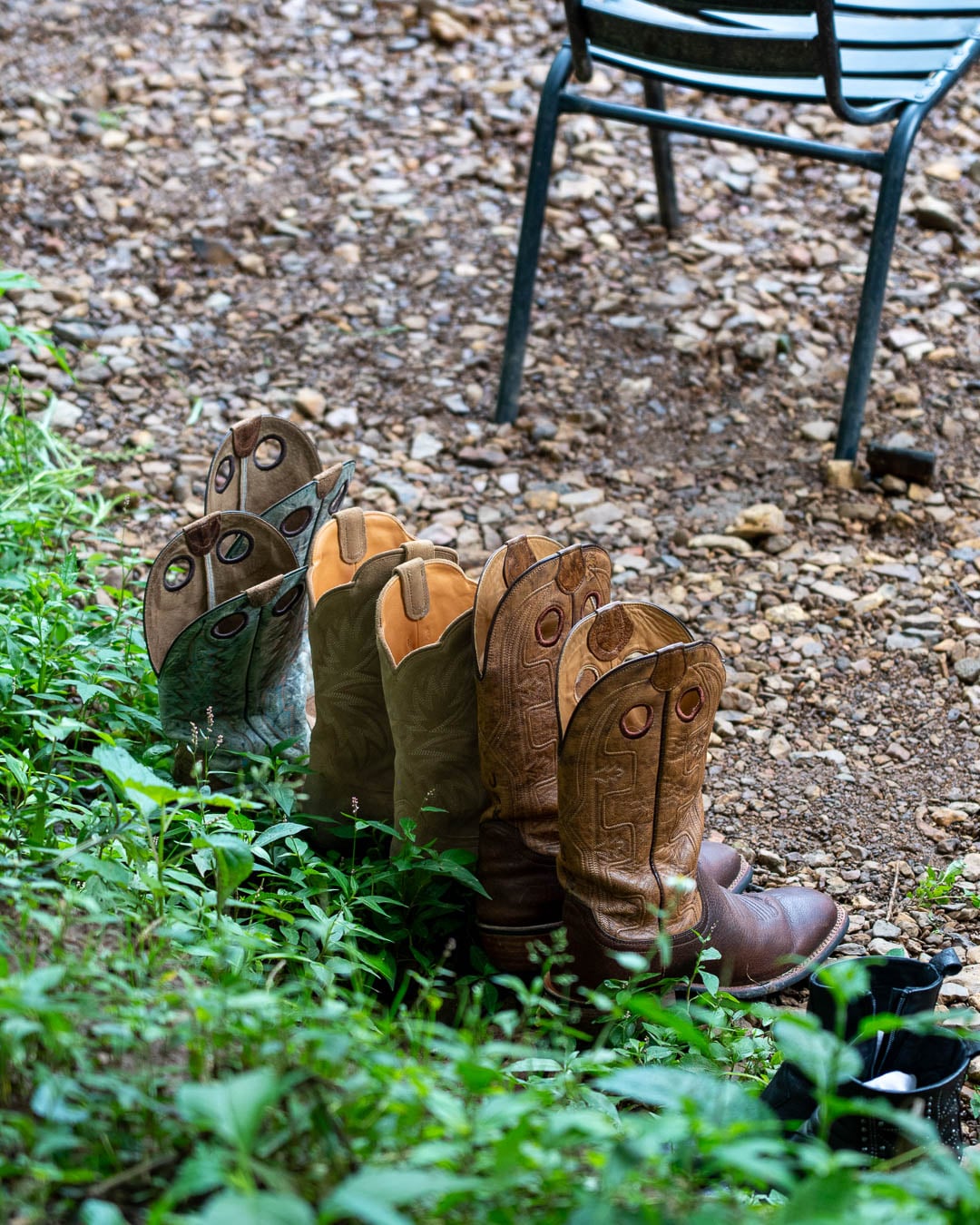
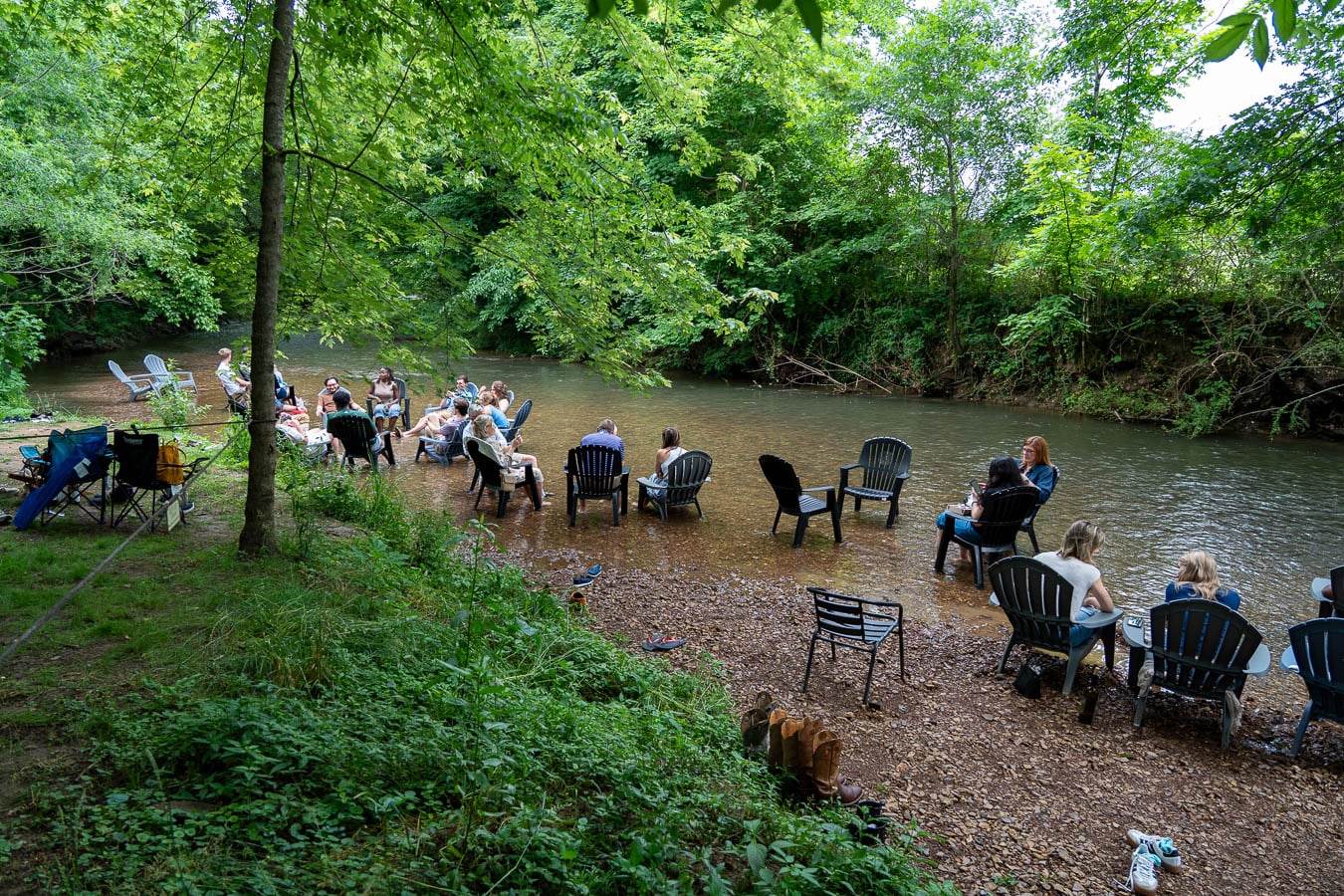
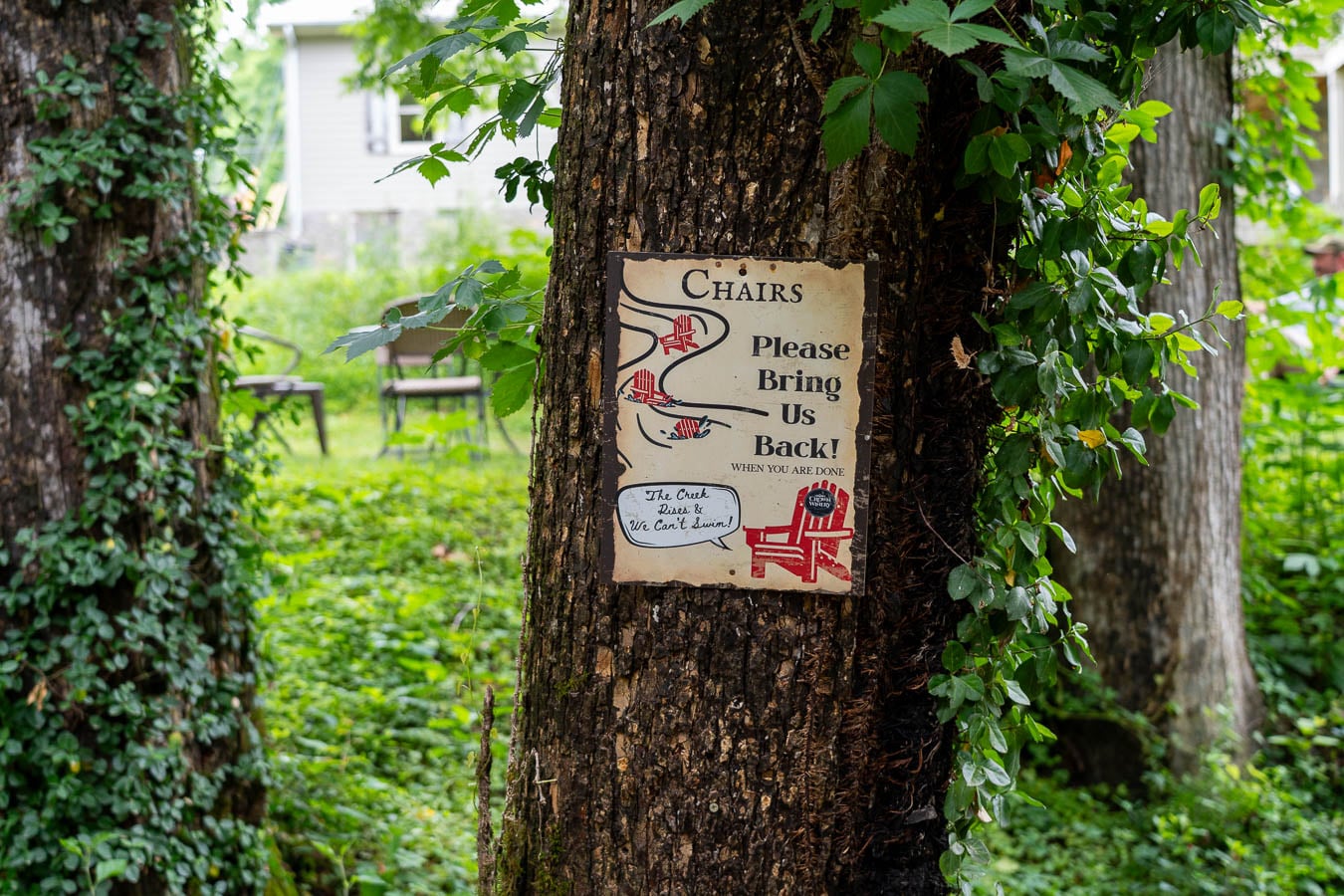
For something that doesn’t require planning ahead, or shoes, stop by the Crown Winery to sip a beverage with your feet in a creek! It’s family friendly and even wine-hater friendly. (This is Tennessee, not Italy; even the wineries have beer.)

Trip Planning Essentials:
If you love the idea of Franklin, as a smaller, quieter alternative to Nashville (just 20 miles south of the Music City), then a trip to Leiper’s Fork, 8 miles west of Franklin, is definitely worth the effort.
Both towns are an easy day trip from Nashville, but…
Should Franklin be more than a day trip?
If you’re looking for relaxation, and maybe just want to see one or two of Nashville’s main attractions, I’d opt for making Franklin the base and Nashville the daytrip.
In Nashville, you can visit the Country Music Hall of Fame or the National Museum of African American Music, then tour the Grand Ole Opry or catch a show there.
And a 30-minute Lyft ride will take you from the overwhelming buzz of downtown Nashville back to the calmer atmosphere of the Harpeth Hotel in downtown Franklin, where we stayed.
Psst! If you get back by 4:45, you can enjoy the daily free local whisky tasting at the Harpeth!
(Travel Points Tip: Use Lyft instead of Uber, and link your account to this bonus points program to get double travel points, on top of your credit card points, that you can redeem for flights.)
The Harpeth was perfect for getting to know Franklin – it’s steps from live music, local restaurants, and walking trails. But if you’re looking for a worthwhile splurge, there’s a place I’d stay that’s right between Franklin and Leiper’s Fork…
Luxury Sustainable Travel in Tennessee
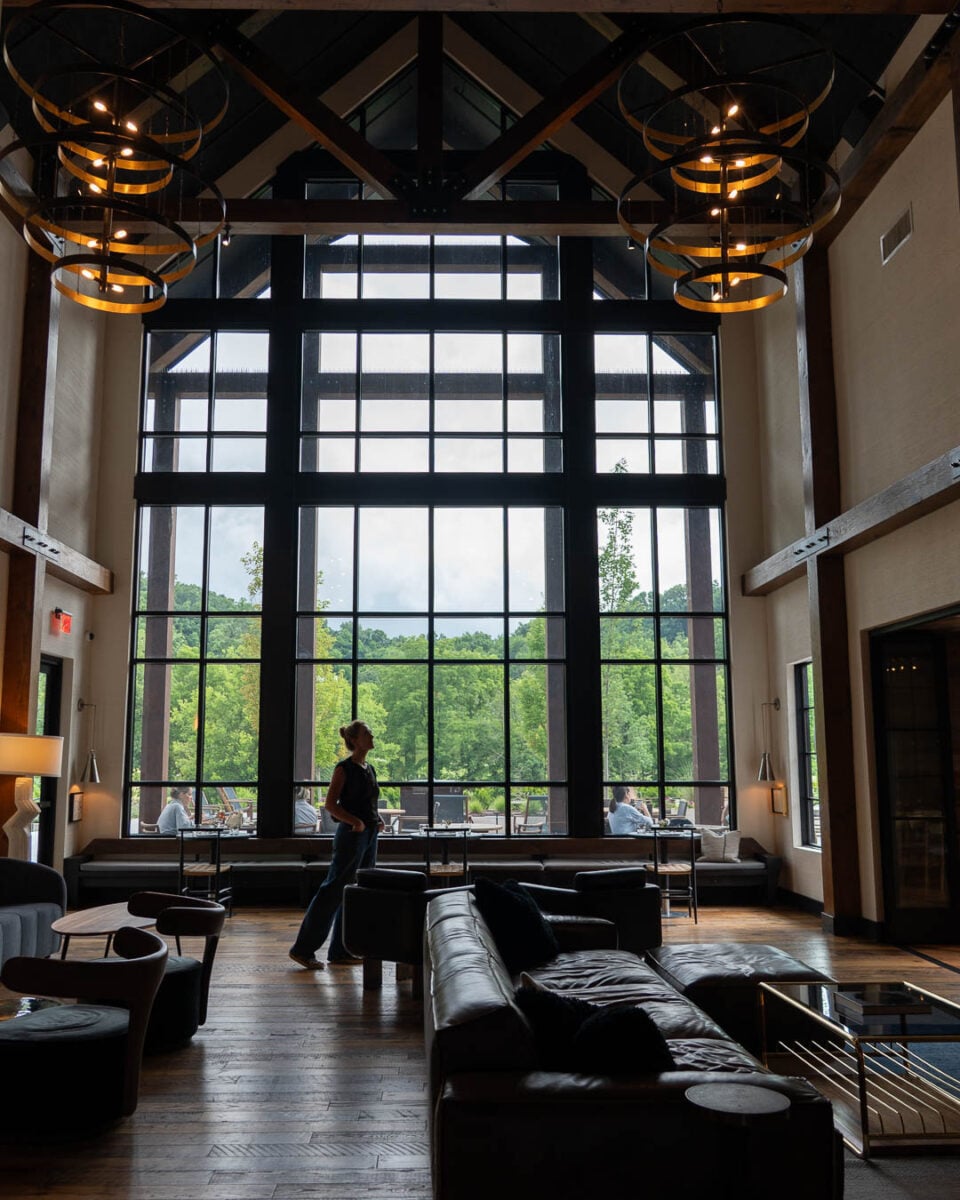
If you want to feel like a celebrity, instead of stalking one in Leipers Fork, I found just the spot. On a scenic, two-lane country road between Leiper’s Fork and Franklin is a resort you might not expect in rural Tennessee.
The Southall Farm & Inn is one of the few properties I’ve visited in the world that would be worth a stay for both the luxury experience, and for how it’s trying to change the world.
While I didn’t stay there this time, I did do something just as satisfying for a dedicated sustainability nerd: I got to interview the leader of the property’s sustainability projects, Paul Flint, and learn about what makes this place so unique.
I could talk about the details forever, but in short, it’s a 500-acre resort that does a whole lot more to be sustainable than offer to recycle and skip washing your towels.
What makes this a sustainable resort
Southall was designed with the goal not of being “off the grid,” but eventually being able to give back to the grid, by producing more energy than it consumes.
Under the parking lot are 90 geothermal wells that connect to heat pumps for sustainable air conditioning.
The team has restored more than 30 acres of native grasses, removing invasive species and creating habitat for millions of honey bees on the property.
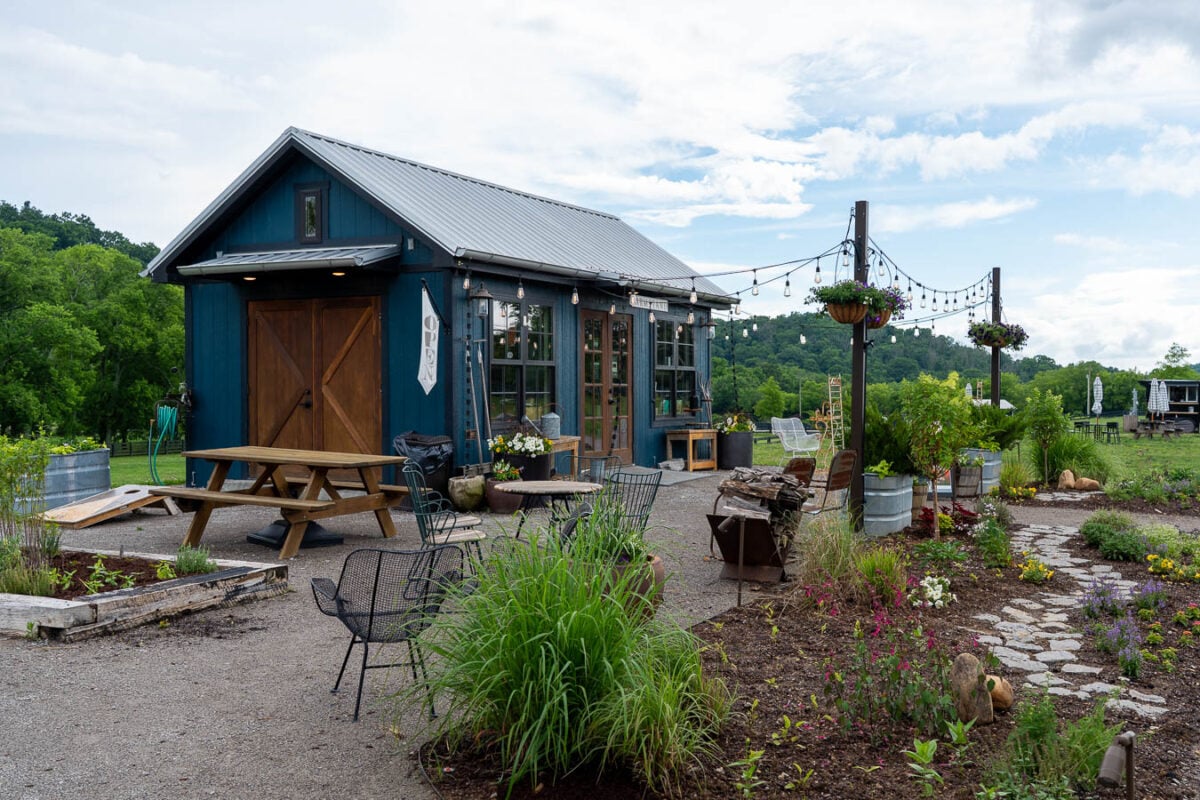
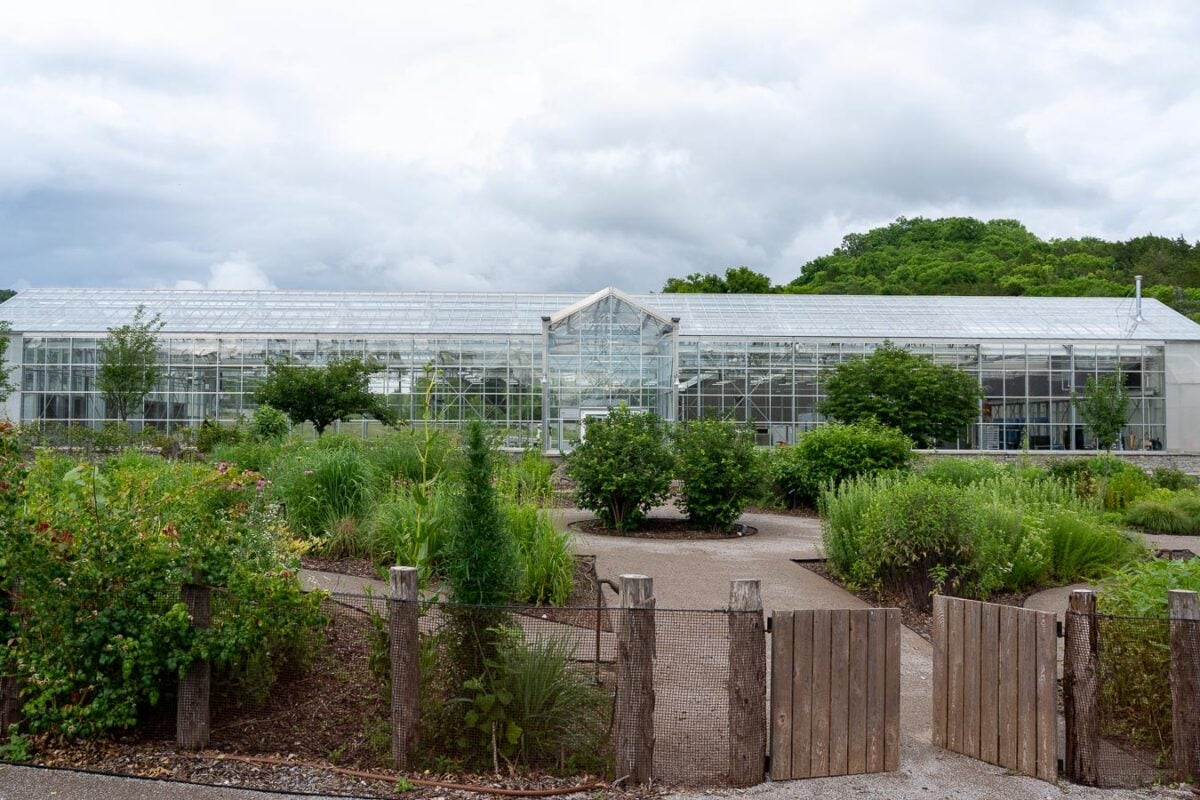
And “farm” isn’t just a trendy part of the name. Southall is actually a working farm producing herbs and salads, apples, citrus fruits, and award-winning honey that are sold locally and used in the restaurants on-property. (One of which won a Michelin Green Star, a prestigious award for eateries that are both high-quality and highly sustainable, before Michelin sadly gave up on the program.)

Instead of synthetic, petroleum-based fertilizers and pesticides, the farm uses organic farming techniques like cover crops to discourage pests, reduce erosion and add nutrients to the soil.
(Sustainability side note: If you want to really understand what makes organic farming different, and read a good story of rural America at the same time, I’d highly recommend The Lentil Underground.)
When I asked Paul what their most difficult project was, his answer was air conditioning – but not for technical reasons:
“It’s getting those systems to work for the American idea that when you come into your room and turn on the HVAC, you’re expecting the 20 HP blower to cool your room from 72 to 62 in about 5 minutes.”
Paul Flint, Southall Farm & Inn
After spending years in Europe and getting entirely unused to AC that feels like a meat refrigerator, I found that answer unsurprising.
Like so many sustainability issues, it’s really a question of getting used to things our grandparents would have called normal. They might be a little slower or a little less “convenient,” but they’re so much more in tune with the pace of nature.
Tennessee, USA
In many ways, that struggle to balance personal comfort with nature, history, development and progress feels like a theme that’s relevant across the US now, not just at an eco-luxury resort, and not just in Franklin.
On our e-bike tour, I asked our guide, Kim, a Tennessee native who looked to be in her 60s, what she liked best about living in Franklin.
She laughed and said, “the old Franklin.”
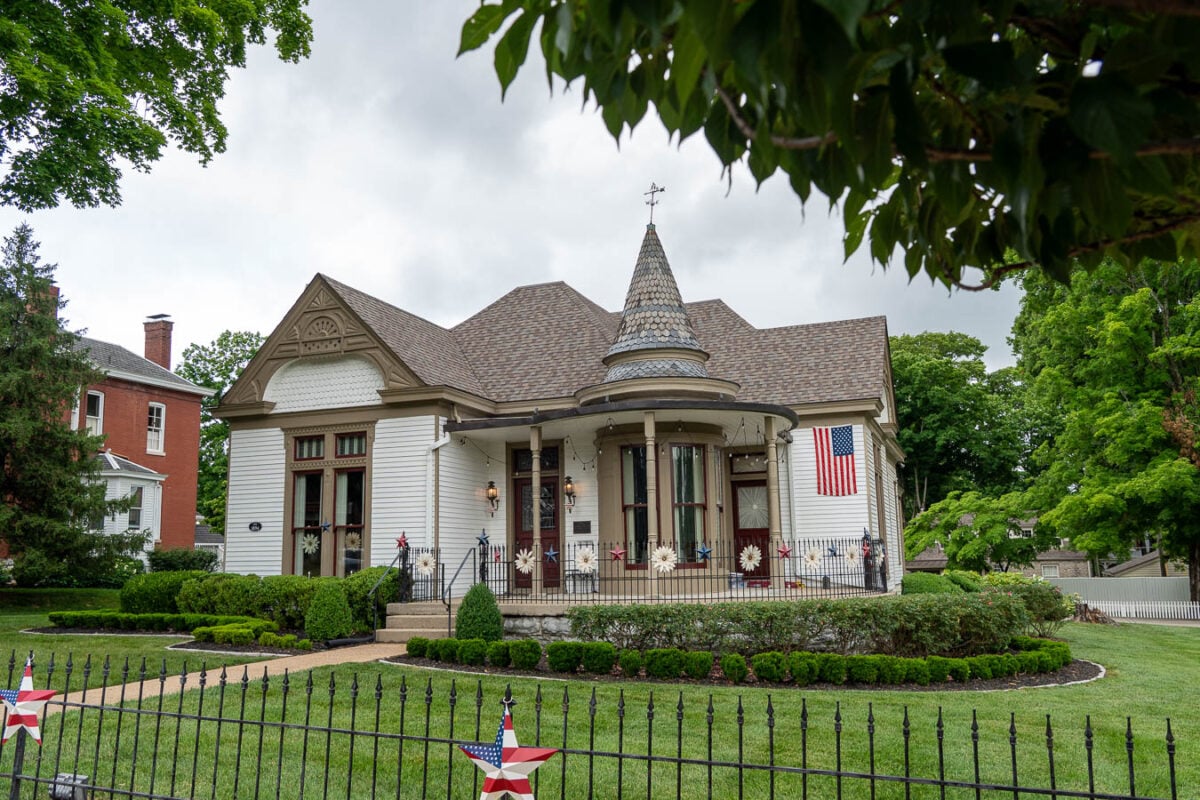
She didn’t mean historic downtown (as opposed to the “new downtown” of Cool Springs, a featureless neighborhood of big box stores). She meant a time before traffic, visitors and higher home prices.
But how far back was really better?
While some locals told me Franklin has become “bougie,” I’m not sure how much local pride they felt when the town made the cover of National Geographic, in 2005, for being the country’s “worst preserved” Civil War site. (The historic battlefield used to have a Pizza Hut on it, before downtown became indie-cool.)
And in the decades before, Franklin was more known for drugs and violent crime than music and cocktails.
Other locals told me Black people didn’t venture downtown for decades, when Main Street was solely dominated by a statue of a Confederate soldier.
This Tennessee town has certainly changed in recent decades, like the country around it has changed. I’m sure every local has their own opinion on what’s gotten better, and which changes they’d like to give back. It’s a classic American story, and Franklin is a town with a lot of lessons to teach and experiences worth sharing, even if you just visit for a weekend getaway.
Before you plan your trip:
Check out my other posts about Franklin and another gem in the Americana Music Triangle: